跳到内容
跳到内容 
目录
你是否曾面对复杂的布线工程,被错综复杂的电线管网络吓到?别担心,你并不孤单!掌握电线管弯曲技巧或许一开始会让人望而生畏,但只要拥有合适的工具、知识和一点耐心,它就能成为你电气工具箱中一项实用技能。无论你是热衷于家庭DIY项目的爱好者,还是渴望成为一名电工的新手,这本全面的指南都将一步步指导你完成电线管弯曲,让你自信地应对复杂的安装工作。.
简而言之,电线导管是一种保护管道,它包裹着电线,保护电线免受物理损坏和环境危害。您可以把它想象成电流的高速公路系统,确保电力安全可靠地输送到您家或建筑物的各个角落。.
不同类型的电线导管 根据其材料和用途,发挥特定作用:
轻质镀锌钢管,安装简便。因其柔韧性和成本效益,常用于住宅和轻型商业布线。.
一种由高强度钢或铝制成的更坚固、更耐用的导管。非常适合需要高耐久性和防护性的场所,例如地下装置或工业环境。.
一个 非金属导管 具有耐腐蚀性和经济性。主要用于住宅布线,兼顾美观性和接地故障保护。.

导管弯管器是一种专门用于将金属导管弯成特定角度的工具,可确保弯管干净利落,外观专业。.
这些杠杆式工具价格实惠且便于携带,适合偶尔使用或小型项目。它们需要手动施力来弯曲导管,是初学者的理想选择。知名品牌包括 Greenlee 和 Klein Tools。.
这些弯管器采用液压油驱动,具有更大的弯曲能力和精度,是较大直径导管或专业应用的理想选择。.
选择合适的弯管机取决于项目规模、使用频率和预算等因素。.

电线管弯曲作业涉及使用锋利工具和潜在危险材料。因此,安全始终是整个过程中的重中之重:
切割和弯曲时,请保护眼睛免受飞溅碎片或金属碎片的伤害。.
皮革工作手套可以保护您的双手免受割伤、擦伤以及弯腰时产生的热量。.
操作噪音较大的液压弯管机时,请佩戴耳塞或耳罩,以防止听力损伤。.
开始弯曲之前,请先熟悉一些关键术语:
弯曲角度以度数衡量(例如,45°、90°、135°)。常用角度用于各种应用,例如创建拐角或连接不同管段。.
弯曲半径是指从导管中心到弯曲处外缘的距离。较小的半径会形成更急的弯曲,而较大的半径则会导致更平缓的弯曲。.
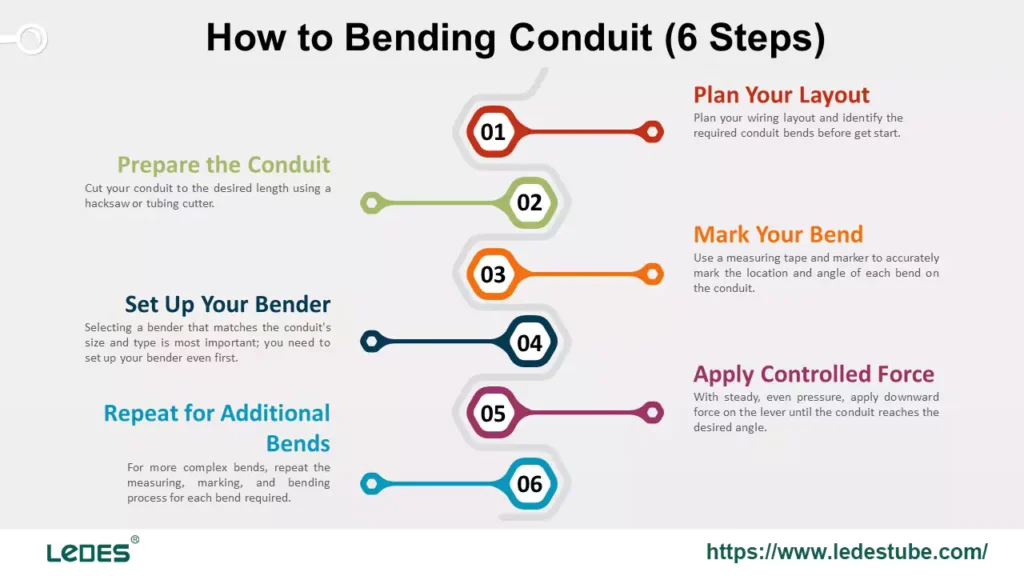
在动用弯管器之前,务必仔细规划布线布局,并确定所需的导管弯曲位置。精确测量是成功完成工作的关键。.
使用钢锯或管材切割器将导管切割成所需长度。确保切口平整、垂直,以防止弯曲不均匀。.
使用卷尺和记号笔准确标记导管上每个弯曲的位置和角度。请参考布局图进行精确定位。.
对齐标记: 将你在导管上做的标记与弯管器上的正确弯曲点对齐。.
脚部放置位置: 弯曲导管时,将脚牢牢踩在弯管机的脚踏板或杠杆臂上,以固定导管。.
选择与导管尺寸和类型相匹配的弯管器最为重要,下一步应该是设置弯管器。.
手动弯管器: 将弯管机的模具(弯曲的钢片)与标记的弯曲点对齐。使用虎钳或弯管机的固定机构将导管固定到位。.
液压弯管机: 将导管放入弯管机的模具中,并确保其正确对齐。连接液压泵,并根据导管尺寸和所需的弯曲角度调节压力。.
调整弯管器(如有必要): 有些弯管器需要根据弯曲角度进行调整。请参阅制造商的使用说明。.
手动弯管器: 用稳定均匀的力向下按压控制杆,直至导管达到所需角度。避免猛拉或扭动,以免造成损坏。.
液压弯管机: 逐步增加液压以达到弯曲目的。密切监控过程,一旦达到所需角度即停止。缓慢释放压力,以避免对导管造成应力。.
小心释放: 弯曲完成后,轻轻释放弯曲器(手动或液压)的压力。.
检查你的工作: 检查弯曲的精度和平滑度。确保整个曲线的半径一致,并且没有扭结或扁平。如有必要,重复弯曲过程直至达到预期效果。.
对于更复杂的弯曲,请对每个所需的弯曲重复测量、标记和弯曲过程。.
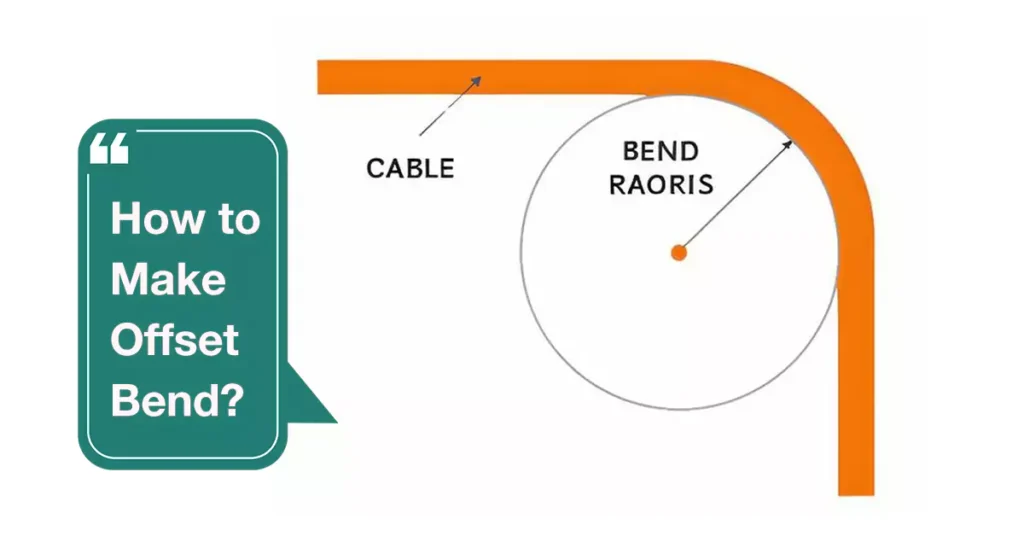
偏置弯头是指在管道绕过障碍物(例如墙柱或管道)时,通过两个方向相反的弯曲来改变管道的路径。想象一下,你需要将管道从一点连接到另一点,但途中有一个垂直障碍物。偏置弯头可以让你巧妙地引导管道绕过这个障碍物,而不会影响其路径。.
偏置弯管具有以下几个优点:
障碍物导航: 它们能有效地引导导管绕过墙壁、管道和其他障碍物,否则就需要复杂的布线。.
空间优化: 通过调整导管的方向,错位弯曲可以节省狭小空间或拥挤区域内的宝贵空间。.
专业美学: 与随意布置的导管相比,错位弯曲可以营造出整洁美观的外观。.
错位弯管由两个相互连接的弯管组成:
第一个弯道: 初始弯曲决定了偏移的方向,使导管远离障碍物。.
第二弯道: 这种反向弯曲使导管在越过障碍物后恢复到原来的路径。.
要做出完美的偏置弯头,需要精准的工艺和对细节的关注。请按照以下步骤操作:
距障碍物距离: 测量起点到障碍物中心的距离。.
偏移距离: 确定需要将导管路径移动多远才能避开障碍物。这就是偏移距离。.
根据偏移距离和障碍物位置选择合适的弯曲角度。常用的偏移角度包括 22.5 度、30 度、45 度和 60 度。请参考导管弯曲图表,找到适合您情况的正确角度。.
导管材料弯曲时会自然略微收缩。请使用导管弯曲图表,根据您选择的角度确定每英寸偏移量的收缩量。.
第一个弯道标记: 将总收缩量加到物体中心的距离上。测量并标记从导管末端到该距离的位置。.
第二弯道标记: 将偏移距离乘以一个常数乘数(在弯曲图表上找到),以确定第二个标记与第一个标记之间的距离。.
第一个弯道: 根据标记的位置,用弯管器将导管末端弯成所需的角度。.
第二弯道: 小心地将导管翻转过来,并弯曲至与第一次弯曲相同的角度。将弯管器旋转180度进行第二次弯曲,以确保两次弯曲后导管都能回到原来的平面。.
- 使用坚固的地面: 在坚固的表面上弯曲可以提供更好的支撑,并防止压扁。.
- 避免施加过大压力: 压力过大会损坏导管。弯曲过程中应施加均匀、可控的力。.
- 请仔细核对您的测量结果: 精准度至关重要。弯曲前务必对每个标记进行两次测量,以免造成代价高昂的错误。.
- 熟能生巧: 偏移弯管乍一看可能令人生畏,但通过练习和注重细节,你将掌握这项基本技能并创作出干净利落的弯管。, 专业电气安装。.
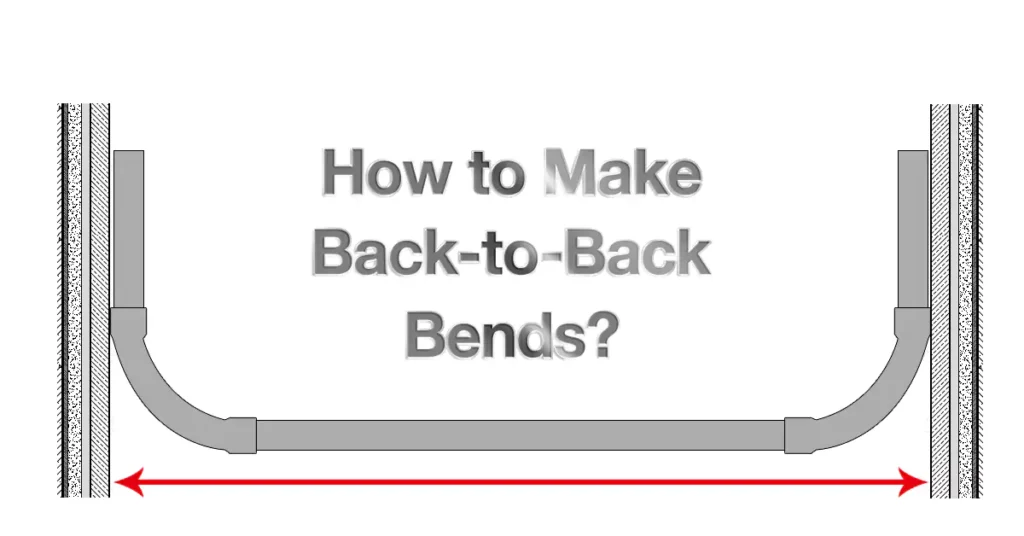
背靠背弯举是指连续完成两个弯举动作。 90度弯道 使用单根导管。想象一下,你需要将导管沿着墙壁向下布线,穿过地板,然后再沿着另一面墙壁向上布线。这时,背靠背弯管就派上用场了!它形成一个加宽的“U”形,使导管能够在这些垂直表面之间无缝过渡。.
空间优化: 连续弯道可以有效地利用空间,方便通过拐角和墙壁或建筑物之间的过渡区域。.
洁净美学: 它们能确保导管路径一致,避免在拐角处杂乱布线,从而打造专业外观。.
守则合规性: 正确执行的背靠背弯头符合安全可靠的电气安装规范要求。.
垂直距离: 测量两个平行表面(墙壁或固定装置)之间的距离,这两个表面将用于连接背靠背的弯管。该测量值决定了您需要制作的每个短管的长度。.
创建准确的存根: 将测量得到的总距离除以二,即可确定弯曲处所需的每段导管的长度。在导管上准确标记这些长度。.
将第一个标记部分(第一个短管)放入弯管器中,使其与工具上的星形标记对齐。确保导管牢固固定到位。.
用脚后跟用力踩住弯管器,同时向下按压导管,形成第一个 90 度弯头,确保弯头到达弯管器上的箭头标记处。.
将导管翻转过来,重复步骤 3,使用剩余的导管段,并将其与弯管器上的星形标记对齐。施加压力,完成第二次 90 度弯曲。.
坚固的表面: 务必在坚固平坦的表面上弯曲导管,例如混凝土或工作台。这样可以确保稳定性并防止损坏。.
受控压力: 弯曲过程中要施加均匀、可控的压力。避免用力过猛,否则可能导致导管扁平或开裂。.
想象你的弯曲: 开始之前,请先在脑海中清晰地构思出你想要达到的最终形状。这个图像将指导你的测量,并确保弯曲成功。.
通过掌握连续弯曲技巧,您将为您的电气弯曲技能增添另一项宝贵的工具,使您能够精准高效地应对各种安装挑战。.
即使是经验丰富的调酒师也会偶尔遇到一些小问题。以下是如何解决常见问题的方法:
这是由于弯曲时施加的压力不均匀,或者使用的弯管器尺寸过小造成的。尝试使用更大的弯管器,或以更均匀的压力重新弯曲该段导管。.
当弯管器位置不正确或施加过大力时,就会发生这种情况。请重新调整导管在模具中的位置,并逐渐施加压力。.
熟能生巧:磨练你的弯曲技巧!
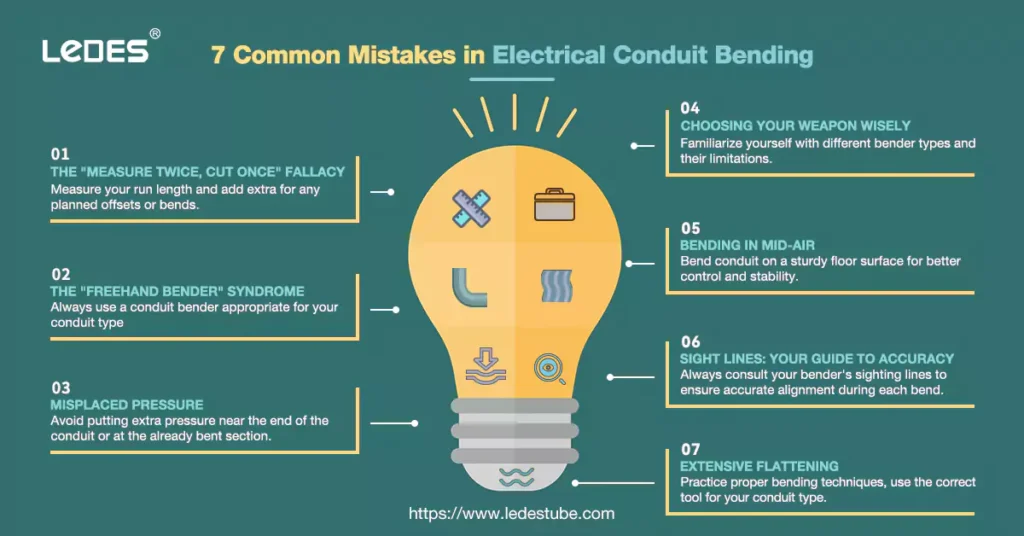
别让这些错误毁了你的下一个项目!本指南深入探讨了七种最常见的导管弯曲错误,并提供专家建议,教你如何避免这些错误,每次都能获得完美的结果。.
虽然这是木工中的一条基本规则,但它对导管弯曲的要求更为严格。.
为什么这是一个错误: 导管截得太短意味着需要重新开始或修补,浪费时间和材料。相反,截得太长则弯曲起来很别扭,容易出现难看的扭结或不均匀的弯曲。.
解决方案: 测量运行长度,并预留一些余量以应对任何计划的偏移或弯曲。至少预留 6 英寸的余量,以便在施工过程中进行调整。切割前,请务必对照布局图仔细核对尺寸。.
切勿凭目测!导管弯曲机是为精确弯曲而设计的;徒手弯曲会导致结果不一致,并可能引发安全问题。.
为什么这是一个错误: 如果没有弯线器的导向结构,你可能会弯出过尖、过平或根本无法正确对齐的弯角。这会损害线路的完整性,甚至造成火灾隐患。.
解决方案: 务必使用适合您导管类型(EMT、RMC)和所需弯曲角度的导管弯管器。.
为什么这是一个错误: 在错误的位置施加过大的压力会导致导管变形,造成扁平或弯曲。这会削弱导管的强度,并且影响美观。.
解决方案: 确保在弯曲模具正后方施加压力,并在整个弯曲过程中保持压力均匀。避免在导管末端或已弯曲部分施加额外压力。.
为什么这是一个错误: 使用错误的工具会导致麻烦和损坏。例如,用硬质导管专用工具(如 Hickey)来连接 EMT 导管可能会造成导管压扁。.
解决方案: 熟悉不同类型的弯管器(例如,手动弯管器、液压弯管器)及其局限性。了解哪些工具最适合特定的导管材料(EMT、RMC 等)和所需的弯曲角度。.
为什么这是一个错误: 虽然有时不可避免,但在没有适当支撑的情况下弯曲导管会导致导管在弯管器内滑脱或因自身重量而坍塌。.
解决方案: 尽可能在坚固的地面上弯曲导管,以便更好地控制和保持稳定性。如果必须在空中弯曲,请确保抓握牢固并提供足够的支撑,以防止导管意外移动。.
为什么这是一个错误: 不使用弯管器上的瞄准线或不正确的导管标记会导致弯曲偏离中心或角度错误。这会影响安装精度,并可能在后续施工中造成问题。.
解决方案: 每次弯曲时,务必参考弯管机的瞄准线,确保精准对齐。弯曲前,使用记号笔和直尺仔细检查标记,以确保精确。.
为什么这是一个错误: 过度压扁是由于施加压力过大或使用了不合适的工具造成的。这会削弱导管的强度,损害其结构完整性。.
解决方案: 掌握正确的弯管技巧,使用适合导管类型的工具,避免用力过猛。弯管完成后检查弯头,确保其平整光滑。.
避免这些常见错误,你就能提高导管弯曲技能,打造专业外观的安装效果,并确保每次都能进行安全高效的电气安装。.
先从简单的练习开始:
90度弯头: 练习制作各种半径的、始终准确的 90 度弯管,以此打好基础。.
偏移弯头: 通过加入错位弯曲来逐步增加复杂性,其中导管向不同方向弯曲两次。.
本指南为您提供了导管弯曲的基础知识。.
继续你的电气工程之旅,探索鱼尾形弯曲和鞍形弯曲等高级技术。, 深入了解电气规范和规章 (例如美国国家电气规范),并考虑参加正规培训或学徒计划以提升技能和职业前景。.
记住,每个电工的职业生涯都是从第一次弯管开始的。享受这个过程,保持好奇心,你就能很快掌握这项基本技能。.
如果您还有任何疑问,请联系Ledes。.