콘텐츠로 건너뛰기
목차
급변하는 현대 사회에서 안전과 지속가능성은 더 이상 선택사항이 아니라 필수 요소입니다. 건물, 교통 시스템, 데이터 인프라가 더욱 발전하고 상호 연결됨에 따라 이를 지탱하는 데 사용되는 자재 또한 현대의 요구 사항을 충족해야 합니다. 과거에는 기계적 강도나 설치 편의성만을 기준으로 선택되었던 전기 배관 시스템은 이제 화재 안전, 유해 물질 배출, 환경 영향 등의 측면에서 평가되고 있습니다.
이러한 우선순위 변화로 저연 제로 할로겐(LSZH) 전선관이 주목받게 되었습니다. 화재 발생 시 피해를 최소화하고 유독 가스 방출을 줄이도록 설계된 LSZH 전선관은 더욱 스마트하고 안전하며 책임감 있는 설계 선택을 향한 광범위한 움직임을 반영합니다. 안전 규정이 강화되고 친환경 건축이 확산됨에 따라 엔지니어, 건축가, 시설 관리자 모두에게 LSZH 전선관의 역할을 이해하는 것이 그 어느 때보다 중요해졌습니다.
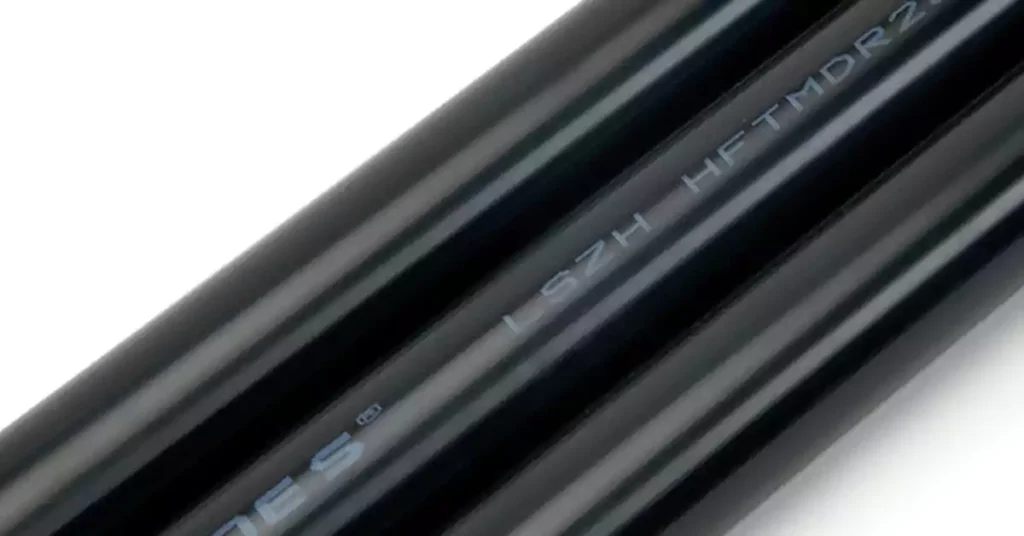
저연 제로 할로겐 전선관 LSZH 전선관은 특수 설계된 소재로 제작되어 할로겐화 가스를 방출하지 않고 화재 발생 시 연기가 훨씬 적게 나는 전기 전선관의 일종입니다. 연소 시 두껍고 유독하며 부식성이 강한 연기를 발생시키는 PVC와 같은 기존 소재와 달리, LSZH 전선관은 안전과 환경 보호를 모두 고려하여 설계되었습니다.
LSZH 소재의 개념은 케이블 산업에서 유래되었으며, 1979년 레이켐(Raychem Corporation)의 리처드 스키퍼(Richard Skipper)에 의해 처음 개발되었습니다. 이 소재는 일반적으로 비할로겐계 난연제, 특히 수산화알루미늄(ALTH)이 첨가된 열가소성 또는 열경화성 화합물로 만들어집니다. ALTH는 고온에 노출되면 화학 반응을 일으켜 수증기를 발생시키고 열을 흡수하며, 보호 탄화층을 형성하여 화염 확산과 유해 가스 방출을 줄입니다.
LSZH 전선관은 화재 발생 시 저밀도, 무독성 연기를 방출하는 능력이 뛰어나 대피를 용이하게 하고 소방관의 안전을 확보하는 데 도움이 됩니다. 또한 염소나 불소와 같은 부식성 할로겐을 방출하지 않으므로 전자 장비의 손상을 방지하는 데에도 효과적입니다.
LSZH 도관은 다음과 같은 특징으로 정의됩니다.
- 화재 발생 시 연기 발생을 최소화하십시오.
- 할로겐 가스 방출 제거
- 건강 및 환경 위험을 줄입니다
- 부식으로 인한 손상으로부터 중요 시스템을 보호하십시오.
- 더욱 엄격해진 최신 안전 규정 준수를 지원합니다.
거주자 안전, 시스템 복원력 및 지속 가능한 설계에 대한 중요성이 점점 더 강조됨에 따라 LSZH 전선관은 화재 위험, 공기 질 및 환경 영향이 최우선 고려 사항인 응용 분야에서 선호되는 선택지가 되고 있습니다.
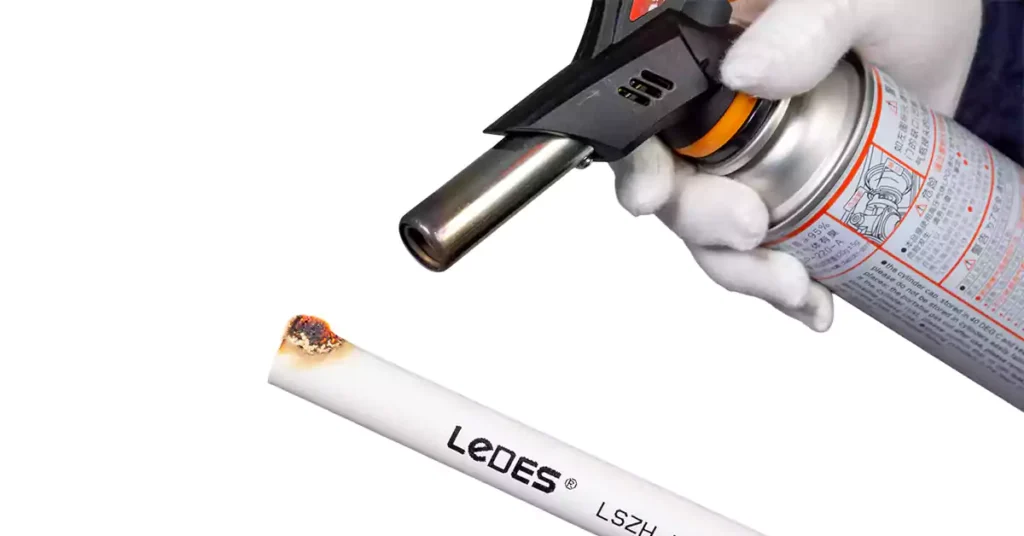
저연 무할로겐(LSZH) 전선관은 기존의 전기 보호 기준을 뛰어넘는 다양한 이점을 제공합니다.
LSZH 전선관은 특수 소재 배합으로 기존 PVC 전선관보다 훨씬 가볍습니다. 동일한 벽 두께의 전선관의 경우, LSZH 전선관은 일반적으로 30% 이상 가볍습니다. 이는 대규모 설치 시 취급 용이성으로 작업 강도를 낮추고 프로젝트 기간을 단축하는 데 큰 이점입니다. LSZH 전선관은 가벼우면서도 우수한 기계적 강도(PVC 전선관보다 15%~20% 높은 강도)를 유지하여 부피 증가 없이 향상된 기계적 보호 기능과 장기적인 내구성을 제공합니다.
화재 발생 시 시야 확보와 공기 질은 생사를 가르는 중요한 요소입니다. LSZH 연소관은 광학 밀도가 낮은 연기를 적은 양으로 배출하도록 설계되어, 거주자에게 더욱 쾌적한 공기와 안전한 대피 경로를 제공합니다. 이 제품은 화염 발생 및 비화염 조건에서 연기 밀도를 측정하는 ASTM E662와 같은 공신력 있는 표준에 따라 테스트 및 검증되었습니다. 또한, 낮은 연기 발생량은 소방관과 구조대원의 안전을 확보하고 연기 입자를 통한 2차 화재 확산 가능성을 줄여줍니다.
부식성 또는 독성 할로겐화 가스(예: 염화수소)를 방출할 수 있는 기존 전선관 재료와 달리, LSZH 전선관은 할로겐을 함유하지 않습니다. 따라서 인체 건강, 민감한 전자 장비 또는 환기 시스템이 중요한 설치 환경에 매우 적합합니다. LSZH 재료는 IEC 60754 표준을 준수하여 독성 및 부식성 가스 방출을 최소화함으로써 실내 공기질을 유지하고 화재 발생 시 주변 시스템의 장기적인 손상을 줄여줍니다.
LSZH 전선관은 IEC 61386, UL1685, UL94와 같은 엄격한 난연 기준을 충족하도록 제조되어 발화를 방지하고 화재 확산을 제한합니다. 일반적으로 LSZH 전선관에는 고온에 노출될 때 수증기를 방출하여 열을 흡수하고 보호 탄화막을 형성하는 수산화알루미늄과 같은 광물 기반 난연 첨가제가 포함되어 있습니다. 이는 화재 확산을 늦출 뿐만 아니라 비상시 구조물의 안전성을 유지하는 데에도 도움이 됩니다.
LSZH 전선관은 표준 PVC 전선관보다 초기 비용이 10~15% 더 높을 수 있지만, 장기적인 경제적 이점은 상당합니다.
- 20~30%는 보험료를 낮춘다고 합니다. 런던 로이즈(2022), 화재 위험이 줄어들기 때문입니다.
- 화재에 대한 저항력이 높고 작동 수명이 길어 유지 보수 및 교체 비용이 절감됩니다.
- 병원, 터널, 데이터 센터와 같이 사람이 거주하는 환경에서 책임 및 소송 위험을 줄입니다.
- 서비스 연속성이 필수적인 중요 애플리케이션에서 다운타임을 최소화합니다.
LSZH 기술 개발의 가장 중요한 이유는 인명 보호입니다. 화재 발생 시 연기가 최소화되고 유독 가스가 방출되지 않으면 건물 내 거주자의 안전한 탈출 가능성이 훨씬 높아집니다. LSZH 배관은 건물 탈출 전략 개선, 실내 공기 생존성 향상, 그리고 응급 구조대원의 작업 환경 개선에 직접적인 역할을 합니다.
지속가능성이 건설 및 전기 분야의 핵심 동력으로 자리잡으면서, LSZH 전선관은 더욱 친환경적인 프로젝트 목표 달성을 지원합니다. 할로겐이 함유되지 않은 LSZH 전선관은 사용 중은 물론 화재 발생 시에도 유해 물질 배출을 최소화합니다. 또한, 많은 LSZH 제품은 재활용이 가능하며, 엄격한 환경 관리 기준에 따라 제조되어 LEED를 비롯한 친환경 건축 인증 시스템의 기준을 충족합니다.
LSZH 전선관의 성능과 안전성은 다양한 국제 및 지역 표준을 통해 입증되었습니다. 이러한 표준은 내화성, 연기 발생량, 독성 및 구조적 성능과 같은 주요 특성을 평가하여 LSZH 전선관이 현대 인프라 및 고위험 환경의 까다로운 요구 사항을 충족하도록 보장합니다.
가장 관련성이 높고 널리 채택된 표준 중 일부는 다음과 같습니다.
국제전기기술자협회(IEC) 61386 – 전선관 시스템의 기계적 및 전기적 성능을 명시합니다.
IEC 60754 – 케이블 소재 연소 시 발생하는 할로겐 가스 배출을 다룹니다.
IEC 61034 – 케이블 연소 시 연기 밀도를 측정합니다.
ASTM E662 – 통제된 조건에서 연기 발생량을 평가합니다.
UL 1685 / UL 94 전기 배관 시스템의 수직 화염 확산 및 내화성을 평가합니다.
NFPA 130 고정궤도 교통 및 여객 철도 시스템에 대한 화재 방지 기준
AS/NZS 2053 – 호주 및 뉴질랜드 지역용 전선관 시스템.
이러한 기준들은 종합적으로 LSZH 전선관이 유독 가스 및 연기 발생을 최소화할 뿐만 아니라 극한 조건에서도 장기적인 구조적 신뢰성을 제공하도록 보장합니다.
LSZH 표준 및 해당 표준이 전선관 시스템에 어떻게 적용되는지에 대한 자세한 내용은 이전 게시물을 참조하십시오. 할로겐 프리 전선관의 코드 준수.
전기 설비용 전선관 재료를 선택할 때 저연 무할로겐(LSZH) 전선관과 폴리염화비닐(PVC) 전선관의 차이점을 이해하는 것이 매우 중요합니다. 아래는 주요 성능 지표를 비교 분석한 내용입니다.
미터법 | LSZH 도관 | PVC 도관 |
연기 밀도 | 낮음 (일반적으로 60 D 이하) | 높음 (최대 600 Ds) |
할로겐 함량 | 할로겐 프리 | 할로겐 함유 |
유독가스 배출 | 독성 가스 배출량 최소화 | 연소 시 유독 가스를 방출합니다. |
난연성 | 우수함 (예: UL94 V-0, 5VA) | 기본 표준 요구 사항을 충족합니다 |
무게 | 약 30% 더 가볍습니다. | 더 무거운 |
기계적 강도 | 높은 | 높음, 특히 스케줄 80 |
극한 온도 | 고도가 높고 추운 환경에서 탁월한 성능을 발휘합니다. | 저온에서는 부서지기 쉽고 고온에서는 연화되므로 LSZH 도관만큼 좋지 않습니다. |
비용 | 초기 비용은 높지만 장기적으로는 비용 절감 효과가 있습니다. | 더욱 비용 효율적 |
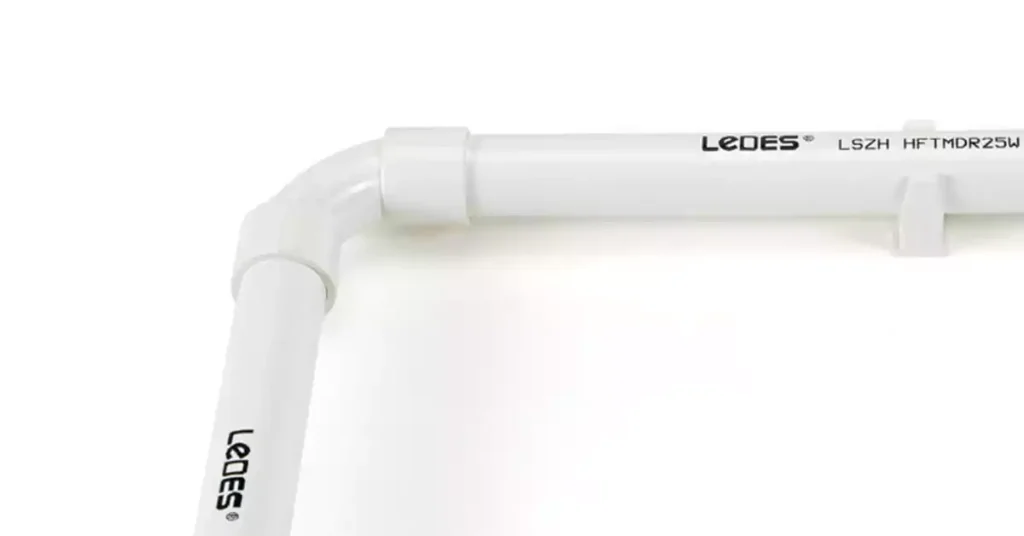
저연 무할로겐(LSZH) 전선관의 올바른 설치는 성능, 안전성 및 장기적인 신뢰성을 보장하는 데 매우 중요합니다. LSZH 시스템은 기존 PVC 전선관과 많은 유사점을 공유하지만, 고유한 특성으로 인해 전문적인 취급 및 기술이 필요합니다. 아래는 업계 전문가 및 표준 기관에서 인정하는 종합적인 모범 사례입니다.
LSZH 전선관은 일반 PVC 또는 금속 전선관과 작동 방식이 다르기 때문에 설치 담당자는 다음과 같은 사항에 대한 특별 교육을 받아야 합니다.
- 올바른 굽힘 및 절단 기술
- LSZH 호환 피팅 또는 무용제 접착제를 사용한 접합 조립
- 온도에 민감한 물질을 다양한 환경에서 다루는 방법
인증된 교육을 통해 설치가 화재 안전 및 자재 무결성 요구 사항을 준수하고 설치 후 고장 위험을 최소화하도록 보장합니다.
- 접착제 호환성: 할로겐이 함유되지 않은 용제 또는 전선관 제조업체에서 승인한 기계식 연결 부품만 사용하십시오. 일반 PVC 용제 접착제는 LSZH 화합물의 난연성 및 할로겐 무함유 특성을 저하시킬 수 있습니다.
- 부속품 및 액세서리: LSZH 인증을 받은 커플러, 벤드, 어댑터 및 접속함을 사용하여 시스템 전체에 걸쳐 일관된 내화 성능을 보장하십시오.
설치 과정에서 정기적인 품질 점검 및 검사를 통해 LSZH 전선관이 고유한 특성을 유지하도록 보장합니다. 설치 절차 및 성능 지표를 문서화하면 엄격한 안전 규정 준수에 대한 강력한 근거를 마련하고 품질에 대한 회사의 노력을 강화할 수 있습니다.
기존 전기 시스템을 개조하거나 업그레이드할 때:
- LSZH 전선관이 크기, 벽 두께, 부속품 및 팽창 특성 측면에서 기존 전선관 재질(예: PVC, 금속)과 호환되는지 확인하십시오.
- 화재에 민감한 환경에서 오염을 방지하기 위해 할로겐이 없는 전선관과 할로겐이 함유된 전선관 사이에 적절한 간격을 유지하십시오.
- 향후 유지보수 담당자를 위해 명확한 라벨링과 최신 도면을 확보하십시오.
- 온도: LSZH 전선관은 그 자체로 극한의 온도 변화를 견딜 수 있으며, Ledes LSZH 전선관은 -45°C에서 +150°C까지 우수한 성능을 발휘하지만, 극심한 저온에서는 취성이 발생할 수 있습니다.
- 자외선 노출: 자외선 차단 기능이 있는 LSZH 전선관은 실외 또는 직사광선이 비치는 환경에서 조기 열화를 방지하는 데 사용하십시오.
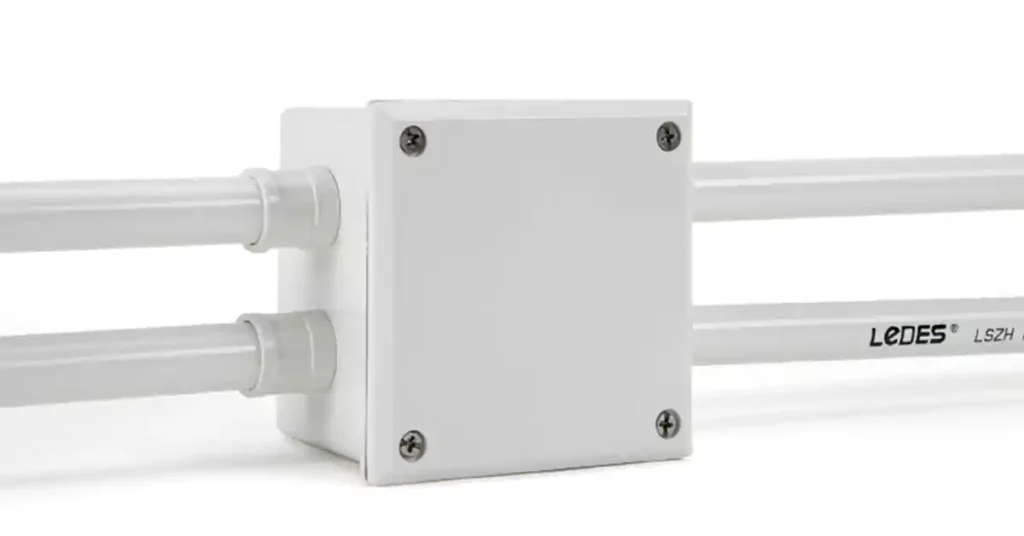
저연 무할로겐(LSZH) 전선관은 화재 안전, 인체 건강 및 장비 보호가 필수적인 환경의 전기 설비에 선호되는 선택지가 되고 있습니다. LSZH 전선관은 밀폐된 공간, 통행량이 많은 곳 또는 민감한 장소에 적합한 특성과 기능을 갖추고 있습니다.
다음은 LSZH 도관이 중요한 역할을 하는 몇 가지 시나리오입니다.
학교는 비교적 밀집된 공간에 많은 수의 학생과 교직원을 수용하며, 출구가 제한적인 경우가 많습니다.
연기 감소는 시야 확보와 안전한 대피를 보장합니다.
할로겐 성분이 전혀 없어 유독 가스 흡입을 방지하며, 특히 어린이에게 매우 중요합니다.
의료 시설에는 산소가 풍부한 환경, 고밀도 케이블, 그리고 신속하게 대피할 수 없는 취약한 환자들이 있는 경우가 많습니다.
무독성 배출물은 환자, 의료진 및 장비를 보호합니다.
내화성은 화재 확산을 더 효과적으로 방지할 수 있습니다.
지하 및 밀폐형 교통 인프라는 이용률이 높고 환기가 제한적입니다.
연기 배출량을 줄이면 연기 축적을 방지하고 유독 가스 흡입으로부터 사람들을 보호할 수 있습니다.
여객 터미널과 항공 교통 관제 시스템은 중단 없는 운영과 안전한 대피 경로가 필요합니다.
LSZH 전선관은 향상된 화재 제어 성능을 제공합니다.
전기차 충전소, 특히 DC 고속 충전기는 고전압 전류를 사용하며 상업용 차고, 지하실 및 밀폐된 공간에 설치되는 경우가 많습니다.
LSZH 전선관은 케이블 고장으로 인한 화재 위험을 효과적으로 줄여주며, 지속가능성 목표 달성과 스마트 인프라 통합을 지원합니다.
태양광 발전소와 옥상 태양광 발전 시스템은 자외선 노출, 고온 및 장기간 직류 부하 조건에서 작동합니다.
LSZH 전선관은 자외선 저항성, 긴 수명 및 환경 안전성을 제공하여 주거용 및 대규모 태양광 발전 시스템 모두에 적합합니다.
중공업 환경과 중요 시설은 화재, 화학 물질 및 전기 위험에 크게 노출되어 있습니다.
LSZH는 사람과 임무 수행에 필수적인 작업을 모두 보호하는 안전하고 내식성이 뛰어난 솔루션을 제공합니다.
These facilities demand 24/7 uptime and protection of high-value digital infrastructure, have very strict fire safety requirement.
Non-corrosive and low-smoke conduit reduces damage to servers, control panels, and networking gear during a fire.
Selecting the right LSZH conduit supplier is critical for ensuring your project meets all performance, safety, and compliance expectations. Here’s what you should consider:
A trustworthy supplier must provide LSZH conduits that comply with major standards like NFPA 130, UL1685 (FT4/IEEE1202 flame tests), and other relevant local and industry-specific regulations. Certifications and third-party test reports should be readily available to verify product quality.
Suppliers with a proven track record in critical infrastructure projects—such as subways, tunnels, railways, airports, and hospitals—are more reliable.
For example, Ledes’ LSZH conduit has been successfully used in projects like the Melbourne Metro Tunnel, a project with extremely high fire safety and environmental requirements.
Good LSZH conduit suppliers invest in strict raw material control and rigorous mechanical and fire performance testing, including:
High and low temperature resistance
UV resistance (for exposed applications)
Compression and impact strength
A good supplier should offer not only rigid LSZH conduits but also corrugated versions, plus all matching fittings. A complete system ensures easier installation, better performance, and compliance across the whole project.
Every project has unique needs. A strong supplier should be able to offer:
Custom sizes or colors
Special formulations (e.g., enhanced UV stability)
Engineering support for product selection and installation advice
While safety and compliance are critical, cost matters too — especially for large-scale projects.
A good supplier offers a competitive price without sacrificing essential performance requirements. LSZH conduit is typically more expensive than standard PVC conduit, but pricing among LSZH options can still vary significantly depending on material formulation and manufacturing quality.
Large infrastructure projects often have tight deadlines. Choose suppliers who:
Maintain strong inventory levels
Offer reasonable lead times
Provide good after-sales support, including warranty and problem resolution services
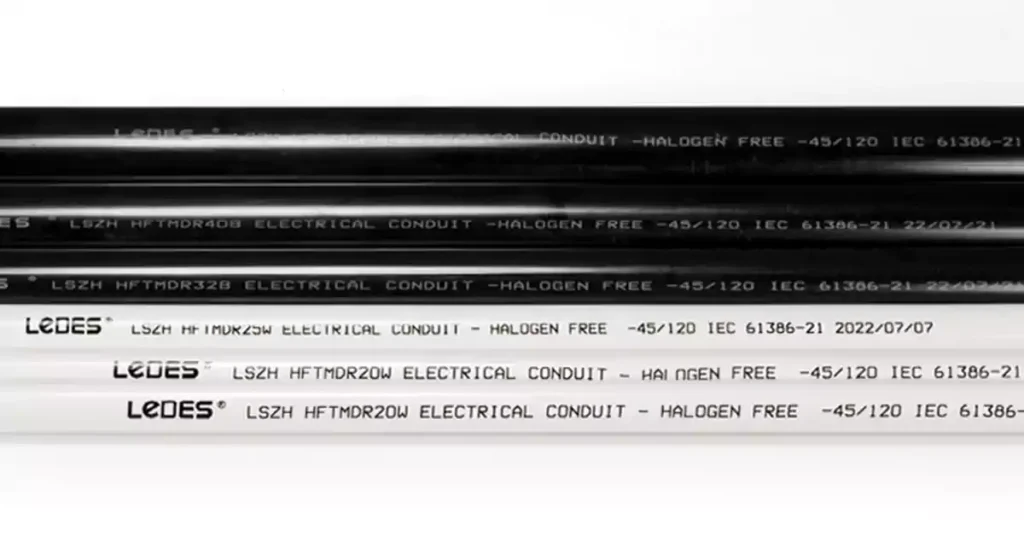
At Ledes, we are driven by a simple but powerful mission: to create safer, smarter, and more sustainable electrical infrastructure for the world. As a trusted global manufacturer specializing in Low Smoke Zero Halogen (LSZH) conduits and fittings, we have built our reputation on delivering high-performance solutions that meet the most rigorous international safety and environmental standards.
With decades of experience in the electrical conduit industry, Ledes has developed a comprehensive portfolio of LSZH rigid and corrugated conduit systems designed to serve a wide range of demanding applications. Our LSZH products are engineered not only for low flame propagation, minimal smoke release, and zero halogen content, but also for long-term mechanical durability, flexibility, and ease of installation.
Ledes offers a full line of LSZH conduit solutions, including:
- Rigid LSZH Conduit – Heavy-duty and medium-duty rigid LSZH conduit for structured commercial and industrial systems
- Flexible LSZH Corrugated Conduit – Heavy-duty and medium-duty corrugated conduit for dynamic installations or tight-space routing
- Low Smoke Halogen-Free Fittings – such as elbows, couplings, adaptors, tees, boxes, and mounting hardware—all designed for compatibility and system integrity
- Expert Formulation: Our R&D team is constantly innovating to refine material performance. Every LSZH compound we use is carefully tested and benchmarked against leading safety standards like UL 94, IEC 61034, and IEC 60754-1/2, ensuring superior flame resistance and ultra-low smoke and toxicity.
- Certified Safety and Compliance: Ledes LSZH conduits and accessories carry IEC, CE and ASTM certifications and test reports, offering global customers the assurance of top-tier quality control and international code compliance.
- Customer-Centric Solutions: From initial consultation to product delivery, we offer tailored conduit solutions that fit each client’s exact specifications. Our knowledgeable team supports every stage of the project with technical guidance, product customization, and fast, responsive service.
- Sustainable Manufacturing: Environmental responsibility is at the heart of our operations. Our LSZH products are fully environmental friendly and produced with minimized carbon footprint—meeting the growing demand for green construction practices.
With reliable quality and excellent performance, Ledes LSZH products are widely used in some global projects.
Melbourne Tunnel Project – Australia
This multi-billion-dollar rail project aims to ease congestion and expand the capacity of Melbourne’s public transport network. In the underground sections of the project, fire safety and smoke suppression were critical priorities due to the confined environment and high passenger volume. Ledes supplied rigid and corrugated LSZH conduits that met the AS/NZS 2053, UL94, IEC and ASTM standards offering low flammability, halogen-free materials, and exceptional performance under high-stress conditions. Our solutions played a key role in ensuring long-term safety and regulatory compliance throughout the tunnel system.
Macau Island Hospital Project – China
As one of Macau’s largest and most modern healthcare developments, the Macau Island Hospital demanded the highest standards for electrical system safety. Our LSZH conduit systems were selected to protect emergency circuits, sensitive medical equipment wiring, and backup power systems. Thanks to their low toxicity, minimal smoke emission, and high chemical resistance, Ledes LSZH products helped the facility meet strict healthcare safety codes while supporting its long-term operational resilience.
At Ledes, we don’t just manufacture conduit—we engineer confidence, safety, and peace of mind into every installation. From local builds to international projects, our LSZH solutions are trusted where it matters most.
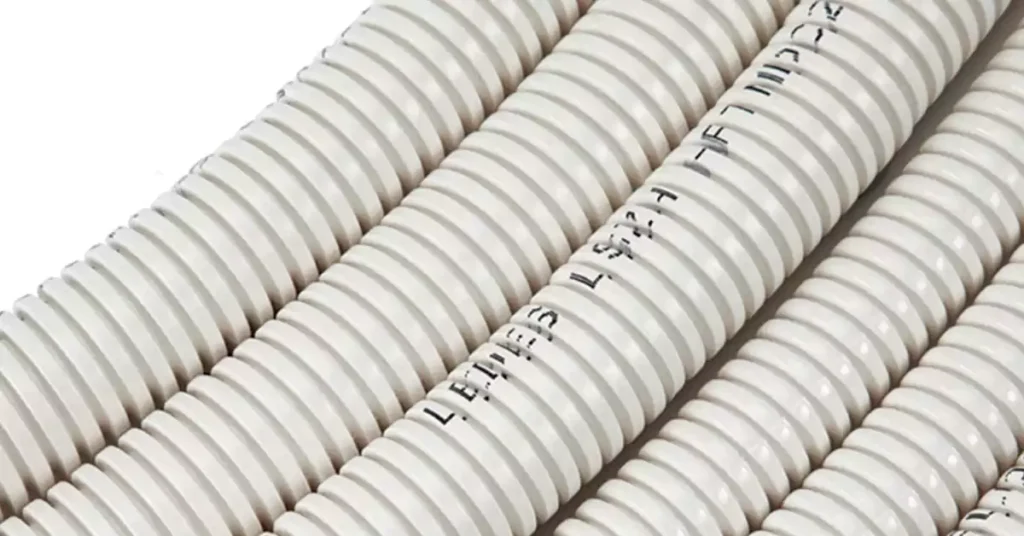
As the global demand for safer, smarter, and greener infrastructure accelerates, the future of Low Smoke Zero Halogen (LSZH) technology lies in innovation, and at Ledes, innovation is at the core of everything we do.
Our Research & Development division is continuously advancing the science of LSZH materials. Building on decades of formulation expertise, Ledes is now developing its fourth-generation LSZH compounds, which is a major leap forward in both safety and performance.
This new generation will deliver improved thermal stability, reduced environmental impact, and greater mechanical strength, while maintaining the hallmark low smoke, zero halogen characteristics. Ensure each advancement meets or exceeds the safety and performance standards.
A next-gen flexible LSZH conduit system is expected to offer up to 50% more bendability than traditional products. Designed specifically for retrofits, tight-space installations, and dynamic environments, FlexGuard LSZH provides superior routing ease without compromising fire safety or halogen-free performance.
In smart infrastructure integration, developing LSZH conduits with embedded temperature and load sensors will be widely utilized in the future. These intelligent conduits sync with Building Management Systems (BMS) to detect overheating, cable overloading, or environmental threats in real-time, enabling predictive maintenance and early failure prevention in mission-critical facilities.
These innovations are not just technological upgrades, they reflect a deeper shift toward resilient, responsive, and future-proof electrical systems.
티he market for LSZH compounds is rapidly expanding as regulations tighten and public awareness of fire and toxicity risks grows. According to recent industry forecasts, the Low-Smoke Zero-Halogen (LSZH) Compounds Market is projected to grow from USD 1.5 billion in 2024 to USD 2.8 billion by 2033, at a CAGR of 7.5% from 2026 to 2033.
This surge is being driven by key sectors such as:
Mass transit systems and tunnels
Data centers and telecommunications
Renewable energy and electric vehicles
Healthcare and public buildings
Smart city and infrastructure modernization initiatives
With regulatory bodies worldwide adopting stricter fire, smoke, and environmental standards, the role of LSZH conduit solutions will only become more central to the future of construction and electrical safety.
As the demand for safer, more sustainable, and higher-performing electrical infrastructure grows, Low Smoke Zero Halogen (LSZH) conduit has become a critical component in modern construction. Its ability to minimize toxic emissions, support fire safety, and meet rigorous global standards positions it as a forward-looking solution across a wide range of applications. At Ledes, we are proud to be at the forefront of this transformation, delivering advanced LSZH conduit systems backed by proven performance, industry certifications, and ongoing innovation. From landmark infrastructure projects to everyday safety upgrades, we remain committed to building a safer, smarter future—one conduit at a time.
LSZH 전선관이란 무엇이며 기존 PVC 전선관과 어떻게 다른가요?
LSZH(저연 제로 할로겐) 전선관은 화재나 고온에 노출될 때 연기를 최소화하고 할로겐화 가스를 전혀 방출하지 않도록 설계된 전기 전선관입니다. 염화수소와 같은 독성 및 부식성 가스를 방출할 수 있는 기존 PVC(폴리염화비닐) 전선관과 달리, LSZH 전선관은 화재 발생 시 호흡기 손상, 장비 부식 및 시야 확보의 어려움을 크게 줄여줍니다.
LSZH 전선관은 옥외 또는 산업 환경에서 사용할 수 있습니까?
Yes. Modern LSZH conduits, including Ledes’ heavy-duty and UV-stabilized lines, are suitable for outdoor, industrial, and even corrosive environments. They offer:
- Excellent UV and weather resistance
- High impact strength and compression resistance
- Operating temperature ranges from -45°C to +150°C, depending on formulation
- Resistance to oils, chemicals, and mechanical abrasion
These properties make LSZH conduit a robust and versatile solution even beyond controlled indoor environments.
LSZH 전선관은 어떤 용도에 주로 사용됩니까?
LSZH conduit is especially suited for installations where human health and critical infrastructure protection are paramount. Common applications include:
Public infrastructure: subway systems, tunnels, airports, and rail stations
의료 서비스: hospitals, clinics, and biomedical facilities
Education: schools, universities, and libraries
Data centers and telecom: where corrosion or smoke could damage sensitive equipment
EV and solar energy systems: especially where sustainable, low-emission materials are required
Marine and offshore installations: due to the need for non-corrosive, flame-resistant materials in confined or salt-exposed spaces
LSZH 전선관은 어떤 국제 표준을 충족합니까?
High-quality LSZH conduits are developed to comply with a wide range of international standards that ensure fire resistance, low toxicity, and environmental responsibility. Ledes LSZH conduit and fittings are designed to meet required standards, including:
국제전기기술자협회(IEC) 61386 – Performance standard for conduit systems
IEC 60754-1/2 – Measurement of halogen acid gas and acidity
IEC 61034 – Measurement of smoke density
UL 94 – Flammability rating of plastic materials
UL 1685 and ASTM E662 – Flame and smoke propagation testing
NFPA 130 – Fixed guideway transit and passenger rail systems safety standard
LSZH 전선관의 주요 기술적 특성은 무엇입니까?
LSZH 전선관은 내화성이 뛰어나고 할로겐 및 유독 가스를 배출하지 않을 뿐만 아니라, 넓은 작동 온도 범위(일반적으로 -45°C ~ +150°C)와 압축 및 충격에 강한 견고한 기계적 강도를 자랑합니다. 이러한 특성 덕분에 실내는 물론 까다로운 실외 환경에도 매우 적합합니다.
LSZH 전선관과 PVC 전선관 중 어떤 것을 사용할지 어떻게 결정해야 할까요?
Choosing between Low Smoke Zero Halogen (LSZH) and traditional PVC conduit depends on the specific requirements of your project, particularly in relation to fire safety, environmental risk, and regulatory compliance.
Use LSZH conduit when:
- The installation is in enclosed or high-occupancy spaces like subways, hospitals, airports, tunnels, schools, or data centers, where smoke and toxic gas emissions during a fire pose a serious risk.
- The project is governed by strict fire safety standards or building codes, such as NFPA 130, IEC 61034, IEC 60754, or UL 1685, which often mandate the use of halogen-free materials.
- You are working on critical infrastructure or mission-critical applications (e.g., telecoms, energy, or emergency systems) where fire-related downtime must be minimized.
- There is a requirement for environmentally sustainable materials, as LSZH compounds do not release corrosive halogens and are often recyclable.
Use PVC conduit when:
- The environment is low-risk, such as in open areas, residential buildings, commercial structures with proper ventilation, or outdoor spaces.
- Budget constraints are a primary concern, and the application does not involve sensitive electronics, densely populated areas, or strict fire codes.
- The system does not require halogen-free components, and standard code compliance (e.g., NEC for general electrical installations) is sufficient.
In many modern installations, both types may be used strategically, LSZH in interior or critical areas and PVC for outdoor or underground runs, to balance cost and compliance.
When in doubt, consult the project’s fire safety engineer or check local regulations, as requirements can vary significantly depending on jurisdiction and industry.