콘텐츠로 건너뛰기

목차
DIY 애호가로서 집을 개조하든, 신축 건물을 시공하는 전문 설치업자이든, 벽 속에 전선관을 설치하는 방법을 아는 것은 미관과 안전 모두에 필수적입니다. 올바른 전선관 설치는 전기 배선을 손상, 습기 및 간섭으로부터 보호할 뿐만 아니라 건축 법규를 준수하는 데에도 도움이 됩니다. 이는 주거용 및 상업용 프로젝트 모두에서 중요한 요소입니다.
이 종합 가이드는 계획부터 마무리 작업까지 벽 속에 전선관을 설치하는 데 필요한 모든 정보를 안내합니다. 다음 내용을 배우게 됩니다.
- 전선관이란 무엇이며 현대 전기 시스템에서 왜 중요한가
- 다양한 종류의 전선관(금속, 비금속, 강성, 연성)과 벽체 내부 설치에 가장 적합한 전선관에 대하여
- NEC 및 기타 지역 전기 규정을 준수하는 방법
- 계획, 측정, 드릴링 및 설치에 대한 단계별 지침
- 안전 예방 조치 및 도구 권장 사항
- 모서리, 방화벽 또는 개조와 같은 까다로운 상황에서 문제를 해결하는 방법
- 언제 면허를 소지한 전기 기술자에게 도움을 요청해야 할까요?
- 지하 전선관 설치와 Ledes 전선관 시스템과 같은 신뢰할 수 있는 제품 옵션에 대해 간략하게 살펴보겠습니다.
전기 배관이란 무엇인가
전기 배관은 전기 배선을 안전하게 통과시키고 보호하기 위해 설계된 보호 튜브입니다. 물리적 손상, 습기, 열, 전자기 간섭으로부터 전선을 보호하는 내구성 있는 덮개라고 생각하시면 됩니다. 또한, 특히 미관과 접근성이 중요한 환경에서 배선을 깔끔하고 정돈되게 유지하는 데 도움이 됩니다.
전기 배관이 중요한 이유
전선관을 올바르게 사용하는 것은 단순히 깔끔하게 정리하는 것뿐만 아니라 안전, 수명 및 규정 준수와도 관련이 있습니다.
- 화재 예방: 전선관은 전기 스파크나 열을 차단하여 화재 확산 위험을 줄여주며, 특히 가연성 벽체 내부나 관통부에 설치할 경우 더욱 효과적입니다.
- 기계적 보호: 전선은 벽 내부의 못, 나사 또는 날카로운 표면에 찔리거나 끼이거나 마모될 수 있습니다. 전선관은 이러한 손상을 방지하는 물리적 장벽 역할을 합니다.
- 습기 및 부식 저항성: 습하거나 실외 환경에서 전선관은 습기나 화학 물질 노출로 인한 전선 절연체의 손상을 방지합니다.
- 규정 준수: 미국 전기 규격(NEC)을 포함한 대부분의 건축 법규는 안전 기준을 충족하기 위해 특정 상황에서 전선관 사용을 요구합니다.
- 향후 유지보수 계획: 전선관을 설치하면 나중에 벽을 허물지 않고도 배선을 쉽게 교체하거나 업그레이드할 수 있습니다.
벽 속에 전선관을 설치하는 이유는 무엇일까요?
벽을 통해 전선관을 설치하는 것이 실용적일 뿐만 아니라 종종 필수적인 몇 가지 시나리오가 있습니다.
- 심미적 개선: 매립형 전선관은 눈에 보이는 전선 엉킴 없이 깔끔하고 매끄러운 외관을 연출합니다.
- 안전 및 규정 요구 사항: 완공된 공간이나 다세대 주택에서 전선을 노출시켜 설치하는 것은 지역 건축 규정을 위반할 수 있습니다.
- 리모델링 및 개조: 회로를 업그레이드하거나 확장할 때 벽을 통해 새 전선관을 설치하면 표면 부착으로 인한 지저분함을 방지하고 기존 마감재 손상을 막을 수 있습니다.
- 교통량이 많거나 위험한 지역에서의 보호: 가정, 사무실, 차고 또는 작업장에서 벽면에 매설된 전선관은 일상적인 마모로부터 배선을 보호합니다.
요컨대, 안전하고, 규정을 준수하며, 오래도록 사용할 수 있는 전기 작업을 진지하게 생각한다면 벽 속에 전선관을 설치하는 것이 가장 현명한 방법인 경우가 많습니다.
일반적인 전기 배관 유형
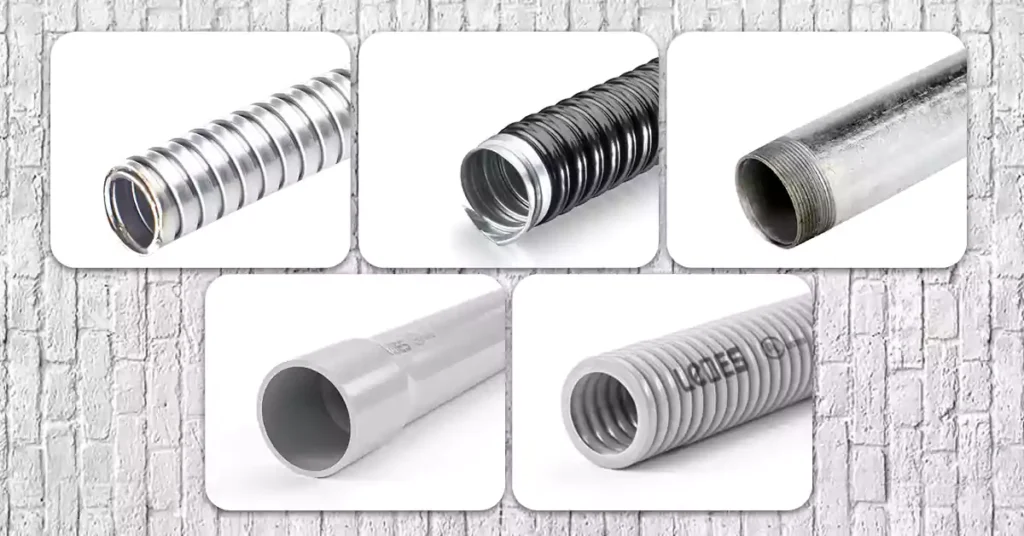
특히 벽 속에 전선관을 설치할 때는 올바른 종류의 전선관을 선택하는 것이 성공적이고 관련 규정을 준수하는 시공에 매우 중요합니다. 모든 전선관 종류가 동일한 것은 아니며, 벽 속 설치에 훨씬 더 적합한 종류도 있습니다. 이 섹션에서는 가장 일반적인 전선관 종류를 재질, 장점, 단점, 일반적인 사용 사례를 포함하여 자세히 살펴보고, 벽 속 설치에 가장 적합한 종류를 강조합니다.
EMT(전기 금속 튜브)
재료: 아연 도금 강철 또는 알루미늄
다른 이름: 얇은 벽 전선관
장점:
가볍지만 견고함
적절한 도구를 사용하면 쉽게 구부릴 수 있습니다.
우수한 기계적 보호 기능을 제공합니다.
불연성 소재로 노출된 환경이나 은폐된 환경 모두에 적합합니다.
NEC(미국 전기 규격)에서 벽면 매립 설치용으로 널리 인정받고 있습니다.
단점:
습기가 많은 환경에서는 적절하게 처리하지 않으면 부식될 수 있습니다.
절삭 및 나사 가공 도구가 필요합니다.
전도성 – 접지가 필요합니다
최적의 사용 용도:
상업 및 주거용 실내 벽면
실내 건조한 장소
내화성 및 기계적 보호가 우선시되는 환경
RMC(강성 금속 전선관)
재료: 아연 도금 강철 또는 스테인리스강
두꺼운 벽 전선관
장점:
내구성이 매우 뛰어나고 충격에 강합니다.
훌륭한 접지 경로
배선에 최대한의 보호 기능을 제공합니다.
위험 환경 및 옥외 환경에 적합합니다.
단점:
매우 무겁고 설치가 더 어렵습니다.
나사산 가공 및 특수 부품이 필요합니다.
다른 옵션보다 더 비쌉니다.
최적의 사용 용도:
산업 시설
서비스 출입구 및 노출 위치
높은 기계적 보호가 필요한 영역
IMC(중간 금속 전선관)
재료: 코팅된 강철
장점:
RMC보다 가볍지만 여전히 강력합니다.
RMC에 대한 비용 효율적인 대안
NEC(미국 전기 규격)에 따라 노출형 및 매립형(벽면 내장형) 모두 사용 가능합니다.
내식성 코팅
단점:
응급구조사보다 더 무겁다
나사산 가공이 필요합니다
전도성 – 반드시 접지되어야 함
최적의 사용 용도:
상업 및 산업용 벽면
실외 및 습한 환경(적절한 부속품 사용 시)
강성 PVC 도관
재료: 경질 플라스틱(폴리염화비닐)
장점:
가볍고 작업이 쉽습니다.
비전도성 (접지 불필요)
부식 방지
저렴한
지하 및 실외 사용에 적합합니다.
단점:
추운 온도에서는 쉽게 부서질 수 있습니다.
내화성이 없음 (벽체 내부 공간에 대한 건축법규를 준수해야 함)
온도 변화에 따라 팽창/수축합니다.
특별히 등급이 지정된 경우가 아니면 플레넘 공간에서 사용하기에 적합하지 않습니다.
최적의 사용 용도:
지하철 운행 (특히 스케줄 80 운행 시)
습기가 있거나 부식성이 있는 환경
실내 벽면 일부 (법규상 허용되고 열원으로부터 보호되는 경우)
ENT(전기 비금속 튜브)
재료: 골판형 플라스틱(일반적으로 PVC 기반)
일명: “스머프 튜브”
장점:
가볍고 유연함
특별한 도구 없이 간편하게 설치할 수 있습니다.
비금속성 및 내식성
벽, 천장, 바닥에 설치할 수 있습니다.
건조한 장소에서 은폐 작업에 대해 NEC 승인을 받았습니다.
단점:
EMT 또는 RMC에 비해 기계적 강도가 낮음
노출된 장소에는 적합하지 않습니다.
내화성이 없음 (내화 구조물에 포함하여 보호 조치가 필요함)
최적의 사용 용도:
주거용 및 소규모 상업용 벽면 설치
건조한 실내 위치
좁은 공간이나 곡선 경로 설계가 필요한 경우
FMC(유연 금속 전선관)
재료: 나선형으로 감긴 금속 스트립
장점:
뛰어난 유연성으로 곡선 구간이나 진동 구간을 통과하는 데 탁월합니다.
어느 정도 기계적 보호 기능을 제공합니다.
특정 매립 설치에 대해 NEC 승인을 받았습니다.
단점:
방수형을 사용하지 않으면 방수가 되지 않습니다.
긴 벽면이나 영구 벽면에 제한적으로 사용 가능합니다.
추가 접지가 필요합니다
진동이 심한 환경에서는 소음이 발생할 수 있습니다.
최적의 사용 용도:
장비와의 최종 연결
벽 내부의 짧고 유연한 배관(예: 박스와 패널 사이)
LFMC(액체밀폐형 연성 금속 전선관)
재료: 방수 열가소성 코팅 처리된 유연한 금속
장점:
방수
뛰어난 유연성과 내구성
실외 및 습한 환경에 적합합니다.
등급에 따라 내화성이 다를 수 있습니다.
단점:
부피가 크고 좁은 벽을 통과시키기가 더 어렵습니다.
표준 FMC보다 더 비쌉니다.
최적의 사용 용도:
옥외 또는 습식 구역 연결
응축기, 펌프 또는 에어컨 장치
실내 벽면 사용은 제한적입니다(주로 출입구).
전문가 팁: 배우고 싶으세요? 가장 많이 사용되는 10가지 전기 배관 유형의 장단점은 무엇일까요? 위 링크를 클릭하여 전문가 가이드를 읽어보세요.
✅ 벽 내부 배선에 가장 적합한 전선관
벽을 통해 전선관을 설치할 때 가장 일반적이고 효과적인 유형은 다음과 같습니다.
응급구조사 보호 기능, 사용 편의성 및 규정 준수의 이상적인 균형
아이엠씨 산업용 또는 옥외 벽면 배관에 사용되는 EMT보다 더 견고한 대안입니다.
이비인후과 - 건조하고 보호된 환경에서 벽을 관통하여 설치하기에 적합하며, 설치가 빠릅니다.
PVC – 주의해서 사용하십시오. 관련 법규가 허용하고 적절한 방화벽이 설치된 경우에만 사용 가능합니다.
Code Requirements for Running Conduit Through Walls
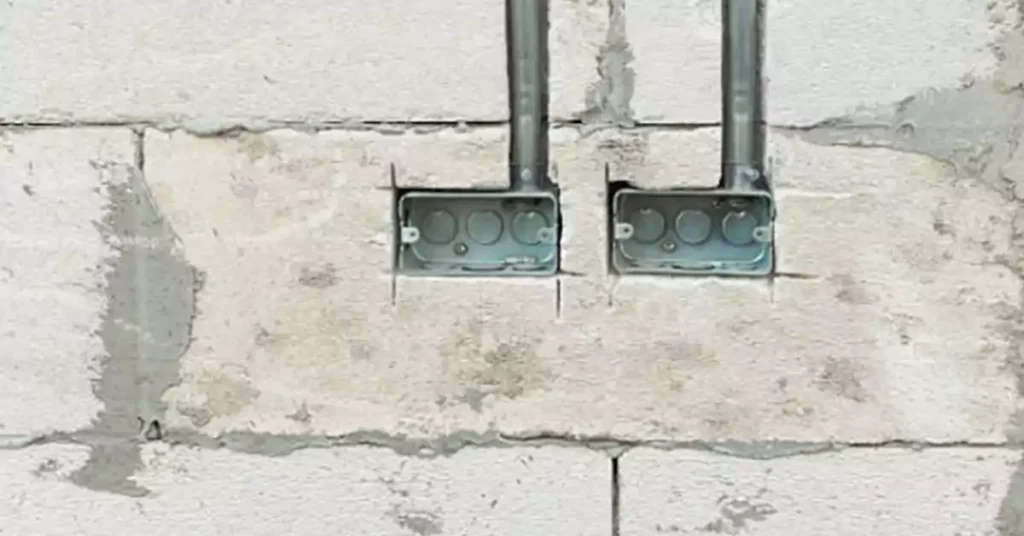
Before grabbing your tools, it’s critical to understand the electrical code requirements that govern conduit installations through walls. These codes aren’t just formalities, they exist to ensure safety, fire prevention, mechanical protection, and long-term system performance. Whether you’re doing a DIY home upgrade or working on a commercial job site, compliance with the National Electrical Code (NEC) and local building codes is a must.
NEC Rules for Concealed Conduit Runs
The National Electrical Code (NEC) lays out the general rules for installing conduit in walls. Here are some key takeaways:
1. Secure Support & Spacing Requirements
Conduit must be securely fastened within 3 feet (0.91 m) of each electrical box and at regular intervals along its run.
For most conduit types (like EMT or PVC), support spacing is typically every 10 feet or less—refer to specific code tables per conduit type.
2. Protection Against Physical Damage
If conduit passes through wood or metal studs, protection plates (nail guards) are often required to prevent screw or nail penetration.
The NEC typically requires 1¼ inches of space from the edge of framing members for embedded conduit—otherwise, a protective plate must be installed.
3. Fire-Rated Assemblies & Firestopping
If you’re running conduit through fire-rated walls or floors (common in multi-family, commercial, or apartment buildings), you must use approved firestop materials to restore the wall’s fire resistance rating.
The firestop system must be UL-listed or approved by local code authorities.
4. Conduit Fill Limits
When running multiple wires through a single conduit, you must follow conduit fill tables in the NEC (Annex C or Chapter 9, Table 1).
Overfilling a conduit can cause overheating, insulation damage, or failed inspections.
5. Bends and Pulling Rules
The total angle of bends between pull points (boxes, fittings, etc.) must not exceed 360 degrees.
A conduit that runs through a wall cavity with multiple turns must still comply with this limit.
6. Grounding and Bonding Requirements
For metallic conduit systems (e.g., EMT, RMC, IMC, FMC):
Grounding is required. The metal conduit can serve as a grounding path, but all fittings must be tight and secure to maintain electrical continuity.
Bonding jumpers may be required across couplings or boxes where continuity might be broken.
7. Conduit Temperature Ratings
Each type of conduit and wiring must be rated for the expected temperature:
Conductors must not exceed the temperature rating of the conduit system or fittings.
Be especially cautious when running conduit through areas like attics, crawlspaces, or near heating ducts.
8. Expansion and Contraction Considerations
For PVC conduit, especially when run through long spans or between temperature-variable areas (e.g., from a cold wall cavity into a heated room):
Expansion fittings must be installed to account for thermal movement.
Anchoring both ends without allowing for movement can cause warping or joint failure.
9. Use in Plenum Spaces
When running conduit through walls that connect to plenum spaces (e.g., air-handling spaces above ceilings or below floors), the materials used must meet plenum-rated fire and smoke standards.
PVC and ENT are not permitted in plenum spaces unless they are specifically listed for such use.
Metallic conduit is generally acceptable in these areas.
팁: Click here to read the ultimate guide to NEC code 2025 to ensure your wiring installation is correct.
Local Code Considerations
While the NEC provides a national baseline, local jurisdictions may have their own rules. Common local requirements include:
- Special firestopping materials approved by the Authority Having Jurisdiction (AHJ)
- Restrictions on plastic conduit in certain buildings
- Required permits and inspections for in-wall electrical work
Always check with your local building department before starting a project. A simple call or online inquiry can prevent costly rework later.
캐나다 전기 규정(CEC)
The CEC, used across Canada, is closely aligned with the NEC in many ways, here are some key and common requirements for conduits run through walls;
- Conduit support spacing and secure mounting are required (e.g., EMT must be supported at intervals not exceeding 1.5 m).
- Conduit must be protected from physical damage when passing through wood or metal framing.
- Conduit fill, bending radius, and maximum bend angles must comply with specific limits (e.g., total bends not exceeding 360° between pull points).
- Fire stopping is required when conduit penetrates fire-rated walls, floors, or ceilings.
전문가 팁: Looking to start your electrical distribution business in Canada? Take some time to review the latest CEC guidance to ensure your products and business expand smoothly in Canada.
AS/NZS 3000 (Australian/New Zealand Wiring Rules)
If your audience includes Australian readers, the AS/NZS 3000 standard (also known as the Wiring Rules) includes some guidance for conduit in walls:
- Conduit passing through walls must be installed in a way that maintains mechanical protection and fire barriers.
- Metal or plastic conduit must not compromise the integrity of fire-rated construction.
- Boxes and fittings must remain accessible, unless the conduit terminates at a fixed appliance.
참고사항: Not knowledgeable with AS/NZS 3000? No problem! Simply read our expert guide to AS/NZS 3000 to quickly train yourself with the electrical code and improve your business’s performance in Australia.
Pre-Installation Planning & Safety Protocols
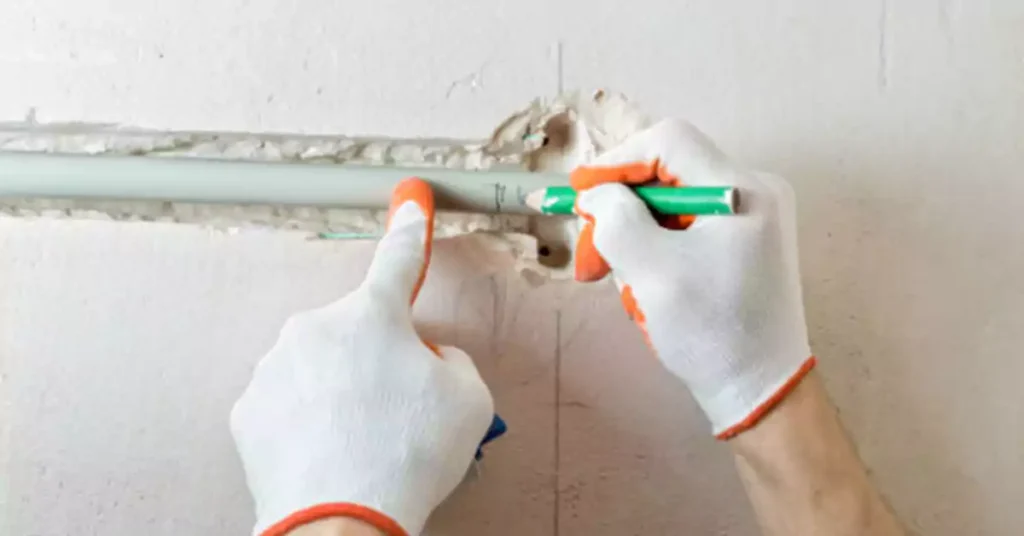
Before cutting into walls or feeding conduit through tight spaces, it’s critical to approach the job with a well-thought-out plan, and a firm focus on safety. Skipping these steps can lead to damaged walls, failed inspections, or even serious injury.
1. Understand Your Walls
Running conduit through a wall starts with understanding the wall structure itself. Different wall types require different techniques, tools, and precautions.
• Stud Walls (Wood or Metal Framing)
Most common in residential and light commercial buildings.
Conduit is typically routed between studs, either vertically (floor to ceiling) or horizontally (between outlets/switches).
Use a stud finder to map framing and avoid drilling into structural or load-bearing members unless allowed.
You must keep conduit at least 1¼ inches away from the surface to prevent drywall screws or nails from puncturing it, use protection plates if needed.
• Masonry or Concrete Walls
Common in basements, commercial buildings, or older homes.
Surface-mounted conduit (e.g., EMT or PVC) is typically used unless chases are built into the wall.
Use hammer drills with masonry bits for any penetration, and ensure all fasteners are designed for concrete anchoring.
Identifying Hidden Obstructions
Use wall scanners or multi-sensor stud finders that can detect:
Water or gas pipes
Electrical cables
HVAC ducts
Reinforcing bars in concrete (rebar)
Mark all detected obstacles clearly before drilling. Damaging pipes or live wires can lead to injury, costly repairs, or both.
2. Electrical Code Compliance: Know Before You Drill
Electrical codes like the NEC (U.S.), CEC (Canada), and others exist for your safety, and failing to follow them can mean rework, fines, or dangerous installations.
• Key Code Considerations
도관 채우기: Use conductor fill tables to avoid overheating. Don’t overcrowd conduit.
Bend Radius & Limitations: Total bends between pull points must not exceed 360°.
지지대 간격: Follow the code requirements for support distance.
Bonding & Grounding: Metallic conduit must be properly bonded to ensure electrical continuity.
Firestop & Sealing: Any penetrations through fire-rated walls require approved firestop sealants or gaskets.
• Permits & Inspections
Many jurisdictions require permits for in-wall conduit runs, especially if:
You’re adding new circuits.
Running conduit through fire-rated or load-bearing walls.
Always check with your local AHJ (Authority Having Jurisdiction) for inspection timelines and documentation requirements.
3. Safety First: It’s Not Optional
Electrical work is dangerous when shortcuts are taken. Protecting yourself and your space should always be the first priority.
• Power Shutdown & Verification
Always turn off power at the breaker panel before any electrical work.
Use a non-contact voltage tester or multimeter to verify the power is off at the work area.
If working near other circuits, de-energize those too when possible.
• Personal Protective Equipment (PPE)
Safety glasses to protect from dust, flying debris, or wire strands.
Insulated gloves when handling wire or working near panels.
Dust masks if cutting drywall, especially in enclosed spaces.
• Ladder Safety
Use ladders on stable surfaces only—never overreach.
Maintain three points of contact (two hands and one foot, or two feet and one hand).
Don’t place ladders near energized equipment.
❗ Avoid These Common Hazards:
Drilling blindly through walls—always inspect first.
Working in damp areas without GFCI protection.
Overloading a conduit with too many bends or conductors.
4. Mapping Out Your Conduit Run
A well-planned route saves time, reduces the need for couplings or fittings, and makes future maintenance easier.
• Plan the Most Efficient Path
Choose wall cavities that align with the desired outlet or box locations.
Avoid load-bearing studs or post-tension cables (especially in concrete walls).
• Consider Future Access
Use pull boxes in longer runs or where changes may be needed later.
Keep conduit slightly oversized to allow for future wiring changes.
• Mark and Measure
Use a level and chalk line to mark horizontal or vertical conduit paths.
Clearly mark cutouts for outlet boxes or junctions before cutting into the wall.
Measure twice, drill once.
Tools & Materials Checklist
Here’s a basic list to get started:
범주 | Examples |
도관 유형 | EMT, PVC, IMC, ENT (as appropriate) |
Inspection Tools | Stud finder, multi-scanner, voltage tester |
Cutting Tools | Hole saws, spade bits, hammer drill (for masonry) |
Fishing Tools | Fish tape, glow rods, string with vacuum assist |
Layout Tools | Tape measure, level, chalk line |
PPE | Gloves, goggles, dust mask, ear protection |
Ladders | Fiberglass ladders preferred near electrical work |
How to Run Conduit Through Walls – Step-by-Step Guide
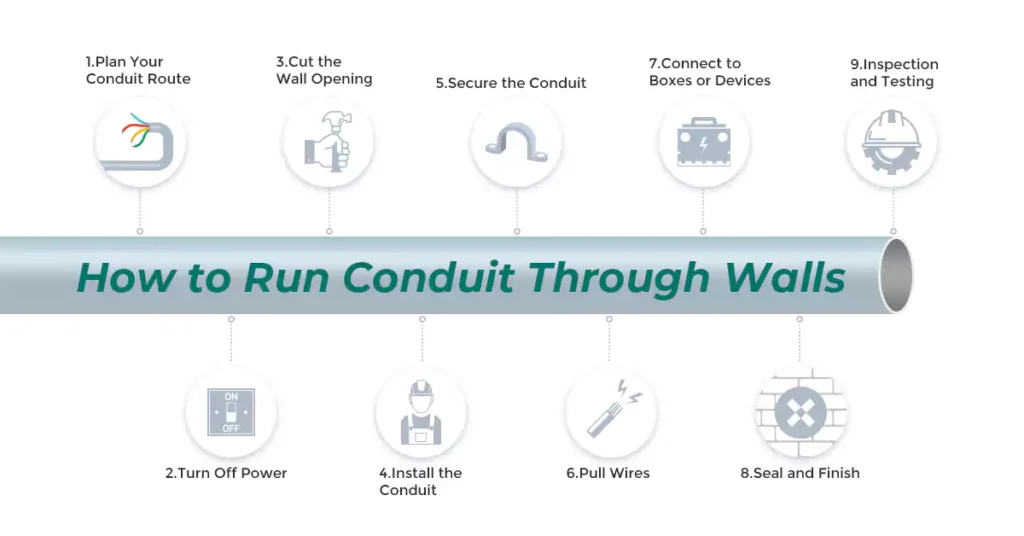
Running conduit through a wall, whether it’s interior drywall or an exterior surface, requires precision, planning, and code-compliant installation. Below is a general step-by-step guide to help you safely and correctly complete the task.
Step 1: Plan Your Conduit Route
- Mark the entry and exit points where the conduit will pass through the wall.
- Check for obstructions inside the wall (pipes, studs, existing wires) using a stud finder or inspection camera.
- Choose the appropriate conduit type:
PVC or EMT for indoor, concealed wall runs.
Liquid-tight or flexible metal conduit (FMC) if flexibility is needed in tight spots.
- Select the correct conduit size, ensuring it meets the fill capacity for the number and gauge of conductors.
Step 2: Turn Off Power
Before any cutting or wiring begins:
Shut off the power at the breaker panel to avoid shock hazards.
Use a non-contact voltage tester to confirm circuits are de-energized.
Step 3: Cut the Wall Opening
For drywall or wood: Use a hole saw or spade bit to bore a hole slightly larger than the conduit diameter.
For masonry or concrete: Use a hammer drill with a masonry bit. For larger holes, use a core drill.
Ensure the hole is:
Neat and clean.
Sized correctly for the conduit plus any required bushing or sleeve.
메모: If fire-resistance rating of the wall must be preserved, use firestop systems or fire-rated sleeves as required by building/fire codes.
Step 4: Install the Conduit
Measure and cut the conduit to length using a hacksaw (PVC) or tubing cutter (EMT).
Deburr sharp edges using a deburring tool or file.
Dry fit the sections first to ensure alignment.
Run the conduit through the hole, from one side to the other.
- Through Wood or Drywall:
You can run conduit directly through the hole.
Use a plastic bushing or connector to protect the cable from abrasion at entry/exit points.
- Through Concrete or Brick:
Consider using a sleeve (e.g., larger diameter PVC) and sealing the space with non-shrinking grout or urethane sealant.
Seal both ends if exposed to moisture.
Step 5: Secure the Conduit
Use conduit straps or clamps to anchor the conduit within code-required intervals (e.g., within 3 ft of each box, and every 10 ft for PVC per NEC 352.30).
Ensure the conduit is level, flush, and not under tension.
Step 6: Pull Wires
Use fish tape or a pull string to guide wires through the conduit.
Apply wire-pulling lubricant if needed, especially for long runs or bends.
Don’t exceed conduit fill capacity (refer to NEC Chapter 9, Table 1, or CEC Section 12).
Step 7: Connect to Boxes or Devices
Securely attach the conduit to the outlet box, junction box, or enclosure using the correct adapter or connector (e.g., male terminal adapter, compression fitting).
Ensure continuity of grounding if using metal conduit like EMT.
Step 8: Seal and Finish
Use caulk or sealant (fire-rated if needed) around conduit penetrations in fire-rated walls.
For exterior walls, use weatherproof fittings and sealants to prevent water intrusion.
If the conduit passes through an air barrier or vapor barrier, use appropriate sealants or sleeves to maintain envelope integrity.
Step 9: Inspection and Testing
If required, call for electrical inspection before energizing.
Test continuity, polarity, and insulation resistance after wiring.
Common Mistakes & Maintenance Tips
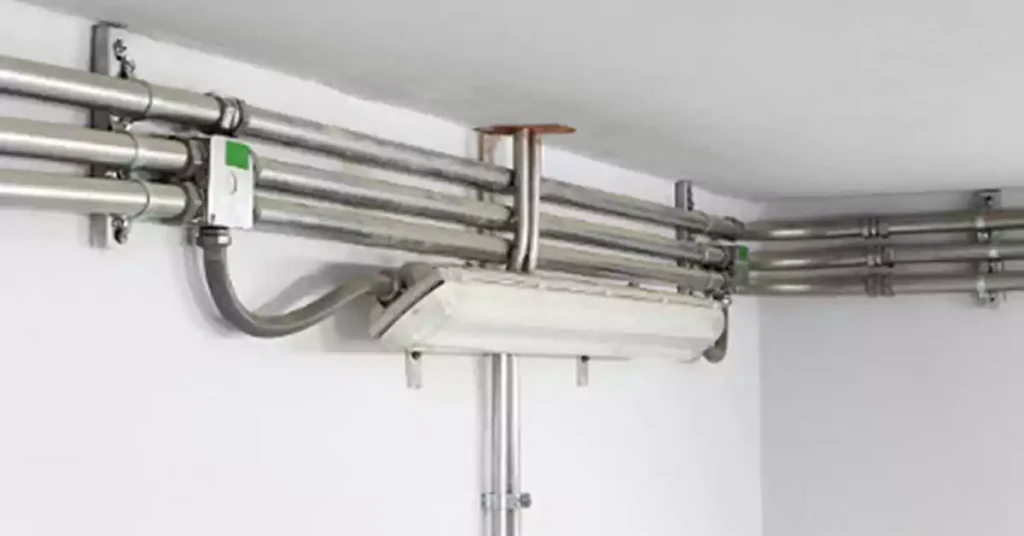
Even with a solid plan, small oversights can cause major headaches, either immediately or years down the road. Knowing the most frequent mistakes and how to prevent them can save you from failed inspections, costly repairs, or unsafe conditions. And once your conduit is installed, basic maintenance keeps it safe and functional for decades.
7 Common Mistakes Need to Avoid
1. Ignoring Electrical Code Requirements
Overfilled conduit, unsupported runs, or excessive bends will fail inspection and make pulling wire nearly impossible.
2. Choosing the Wrong Conduit Type
Using flexible conduit inside a wall cavity where code requires rigid metallic or nonmetallic conduit.
Using indoor-rated PVC for an exterior wall penetration, leading to UV damage and brittleness.
3. Skipping Deburring
Sharp conduit edges can slice insulation during wire pulls, creating hidden faults.
Always smooth cut ends with a file or deburring tool.
4. Poor Sealing at Penetrations
Gaps around conduit where it passes through a wall can allow pests, moisture, or air leaks.
In fire-rated assemblies, failing to use firestop sealants is both unsafe and a code violation.
5. Improper Grounding or Bonding
Metallic conduit that isn’t bonded properly can become energized in a fault condition, posing shock hazards.
6. Routing Through Load-Bearing Structural Elements
Cutting large holes in studs, joists, or beams without reinforcing them can compromise structural integrity.
Always follow building code clearance and boring limitations.
7. Not Labeling Circuits
Skipping wire labeling makes future maintenance and troubleshooting far more difficult.
5 Maintenance Tips for Long-Term Reliability
Unlike exposed cable, conduit systems can last decades if installed and maintained correctly. Here’s how to keep them in top shape:
1. Schedule Periodic Inspections
Every few years, check for:
Loose conduit straps or supports.
Corrosion on metal conduit.
Cracks or brittleness in PVC.
Moisture accumulation in boxes or fittings.
2. Protect Against Corrosion
For EMT or rigid metallic conduit in damp locations, apply anti-corrosion coatings or use stainless steel fittings.
Seal exterior penetrations with weatherproof caulking.
3. Check Seals and Firestopping
Inspect firestop materials for deterioration and replace as needed to maintain wall ratings.
4. Monitor for Wire Movement
In areas with vibration (near HVAC or machinery), ensure conduit fittings remain tight and locknuts are secure.
5. Keep Documentation
Maintain a record of:
Conduit routes.
Circuit numbers.
Pull box and junction box locations.
This makes any future upgrades or troubleshooting easier.
When to Call a Professional
Running conduit through walls can be a manageable project for experienced DIYers, but there are situations where calling a licensed electrician is the safer, faster, and more cost-effective option. Knowing your limits can protect you from electrical hazards, failed inspections, and costly mistakes.
1. Lack of Code Knowledge
If you’re not fully familiar with your local electrical code (NEC in the U.S., CEC in Canada, or other regional standards), you risk non-compliance. Code violations can:
Delay your project during inspection.
Create hidden safety hazards.
Require expensive rework.
2. Service Panel Work
Any work involving:
Installing new breakers.
Expanding service capacity.
Modifying the main service entrance.
These are high-risk tasks that require proper training and certification.
3. Running Conduit in Fire-Rated Walls or Ceilings
These installations demand special materials and sealing methods to maintain the fire-resistance rating. Professionals know the exact firestop products and procedures required.
4. Working in Hazardous or Specialized Environments
Such as:
Wet locations (pools, outdoor, basements prone to flooding).
Explosive or flammable atmospheres (workshops, fuel storage areas).
These require specific conduit types, fittings, and sealing techniques.
5. Complicated Routing Through Finished Walls
If conduit must pass through multiple floors, tight spaces, or around structural elements, a pro can save you from unnecessary demolition or damage.
6. Upgrading or Integrating with Old Wiring
Old wiring may have degraded insulation, hidden splices, or outdated grounding. A professional can safely test, replace, or integrate it into a new conduit system.
7. When Permits & Inspections Are Mandatory
In many jurisdictions, permits for certain conduit runs require work by a licensed electrician to pass inspection.
How to Run Conduit Underground
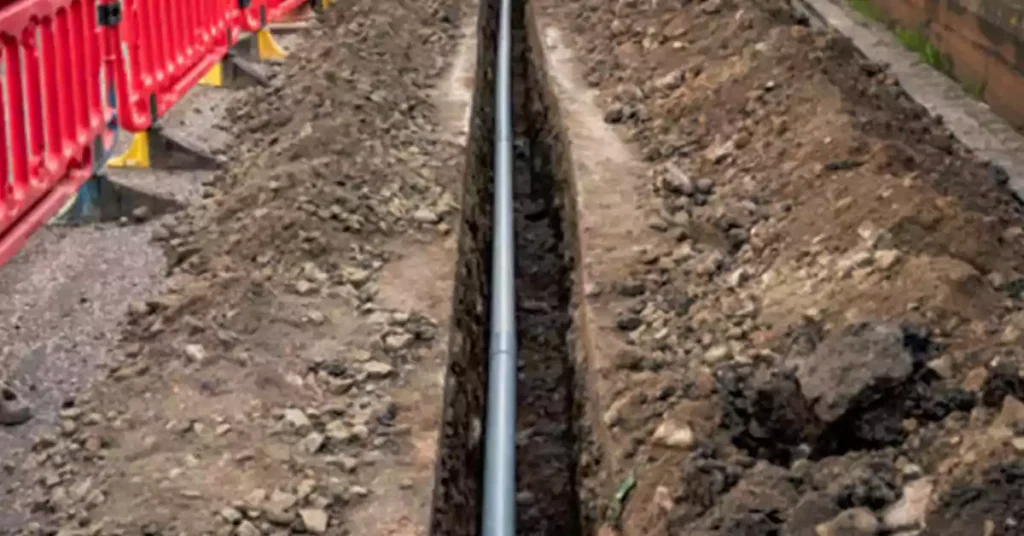
Underground conduit runs are common when you need to bring power to detached garages, sheds, outdoor lighting, or other structures away from your main building. While similar in principle to in-wall conduit runs, underground installations come with their own set of materials, tools, and code requirements to ensure long-term durability and safety.
What to Know Before Installation
A. Choosing the Right Conduit for Underground Use
Not all conduit types are designed to withstand soil contact and moisture exposure. Common code-approved choices include:
PVC Schedule 40 or 80 (Rigid Nonmetallic Conduit)
Direct Burial PVC Conduit, such as DB conduits and EB conduit for concrete encasement
강성 금속 도관
B. Code-Required Burial Depths
The National Electrical Code sets minimum cover requirements (in inches), but always confirm with your local authority since rules may vary.
Step-by-Step: Running Conduit Underground
1. Plan the Route
Choose the most direct path to minimize bends and fittings.
Mark both ends and intermediate waypoints with stakes or spray paint.
2. Check for Utilities
Call your local “call before you dig” hotline (e.g., 811 in the U.S.) to locate underground gas, water, and communication lines.
3. Dig the Trench
Use a trenching shovel or rental trenching machine.
Maintain consistent depth according to code.
Avoid sharp corners — underground bends should be gradual.
4. Lay the Conduit
Dry-fit all sections first.
For PVC, apply primer and solvent cement at each joint.
For RMC, thread and tighten with approved fittings.
5. Install Pull Strings
Before backfilling, run a fish tape through the conduit and leave a pull string for later wire installation.
6. Backfill Properly
Place 4–6 inches of sand or fine soil over conduit to protect it from rocks.
Backfill with excavated soil, tamping gently to prevent settling.
7. Pull the Conductors
Use wire rated for wet locations (e.g., THWN-2).
Apply wire-pulling lubricant for long runs.
Ledes Electrical Conduit Solutions
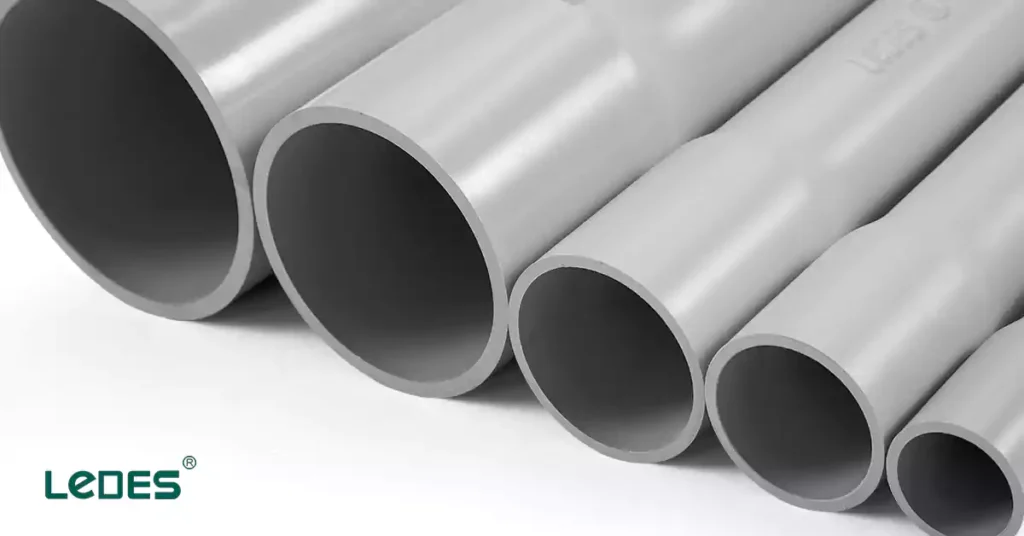
When seeking high-quality, versatile, and code-compliant conduit systems, Ledes stands out as a globally recognized manufacturer. With over 16 years of experience, Ledes has earned a reputation for delivering premium PVC conduit and fittings across diverse sectors—from residential and commercial construction to renewable energy and infrastructure projects
왜 Ledes를 선택하시나요?
- Global Certifications & Standards: Ledes products meet UL, ASTM, CSA, ETL, AS/NZS 2053, IEC, CE, RoHS, and ISO standards, ensuring compliance for a wide range of projects and regions.
- 다양한 제품군: Whether you need rigid or corrugated conduit, flexible ENT, low-smoke halogen-free (LSZH), direct burial ducts, solar-grade conduit, or comprehensive fitting lines, Ledes has you covered.
- 맞춤형 솔루션: Ledes offers tailored conduit systems for unique applications, helping streamline project delivery and meet specific installation requirements.
- Proven Quality: UL 651-rated Schedule 40 and 80 conduit from Ledes supports 90 °C wiring, ideal for high-demand applications like EV charging, data centers, and smart buildings.
- Competitive Pricing & Support: With wholesale pricing, direct factory supply, and responsive customer service, Ledes aims to offer efficiency and value, especially for large-scale builds.
Ledes Product Series Highlights
- UL & CSA Conduit Series
Includes rigid PVC conduit (Schedule 40/80), 이비인후과 튜빙, 그리고 direct burial duct options, all meeting North American standards. Ideal for both indoor and underground applications.
- LSZH (Low Smoke Zero Halogen) Series
Designed for maximum safety in fire-prone or sensitive environments (e.g., hospitals, tunnels, schools). Features UL 94 V-0 fire rating, UV resistance, and LSZH 도관 production—prioritizing occupant safety and environmental compliance.
- Solar & Outdoor Conduit Series
Built for harsh exterior conditions and solar installations, these solar conduits conform to AS/NZS 2053 and IEC standards, offering UV resistance and durable outdoor performance.
- AS/NZS 2053 PVC Conduit Series
Designed specifically for Australian and New Zealand markets.
Includes rigid and corrugated PVC conduit and fittings certified under AS/NZS 2053 and IEC standards.
Includes a tailored LSZH (Low Smoke Zero Halogen) line suitable for safer, greener builds in Australia.
결론
Running conduit through walls isn’t just about hiding wires, it’s about building safety, durability, and compliance into your electrical system from the start. Whether you’re installing a single outlet or wiring an entire property, following best practices ensures your work stands the test of time.
From understanding conduit types and meeting electrical codes to careful pre-installation planning, safety checks, and precise execution, every step matters. Avoiding common mistakes, and knowing when to call an expert can mean the difference between a smooth inspection and a costly redo.
The bottom line: take the time to plan, use the right materials, and never cut corners on safety or compliance. Do it once, do it right, and your conduit installation will deliver safe, clean, and code-compliant wiring for years to come.
자주 묻는 질문
벽을 통해 전선관을 설치할 수 있나요?
네. 지역 전기 규정을 준수한다면 대부분의 벽체에 전선관을 설치할 수 있습니다. 핵심은 적절한 전선관 종류를 선택하고, 제대로 고정하며, 전선이 쉽게 통과할 수 있도록 적절한 굽힘 반경을 유지하는 것입니다. 방화벽은 내화 등급을 유지하기 위해 특별한 밀봉 방법을 사용해야 합니다.
PVC 전선관을 벽 안에 설치할 수 있나요?
네, 규격에 맞는 경질 PVC 전선관은 벽 내부에 사용할 수 있습니다. 실내에서는 일반적으로 Schedule 40 PVC를 사용하며, Schedule 80은 충격 저항성이 더 높습니다. 안전한 접합을 위해 PVC 접착제를 사용하고, 방화벽을 통과할 때는 방화 규정을 준수해야 합니다.
석고보드 벽을 통해 전선관을 어떻게 설치해야 할까요?
구멍을 표시할 위치를 표시하고, 홀쏘 또는 석고보드톱으로 깔끔하게 잘라낸 후, 전선관이 나오는 부분에 부싱이나 커넥터를 설치하십시오. 배관이나 기존 전선이 있는지 확인하기 위해 항상 벽체 탐지기로 먼저 벽을 검사하십시오.
주거용 건물에 전선관을 설치할 수 있나요?
네. 가정에서는 로멕스(NM 케이블)를 흔히 사용하지만, 전선관은 기계적 보호 기능이 더 뛰어나고 나중에 재배선을 더 쉽게 할 수 있도록 해줍니다. 특히 차고, 지하실, 그리고 손상 위험이 있는 장소에 유용합니다.
벽을 통과하는 전선관을 밀봉하는 방법은 무엇입니까?
Use an appropriate sealant or firestop material, depending on the wall type:
Exterior walls: silicone, polyurethane, or foam sealant.
Fire-rated walls: firestop putty or intumescent sealant.
전선관을 벽에 고정하는 방법은 무엇인가요?
규정에 따라 간격을 두고 금속 또는 플라스틱 전선관 스트랩과 클램프를 사용하십시오. 벽 유형에 맞는 앵커를 선택하십시오. 벽돌 벽에는 석재용 나사를, 스터드 벽에는 목재용 나사를, 석고보드 벽에는 토글 볼트를 사용하십시오.
벽 안에 전선관을 설치하는 방법은 무엇인가요?
배관 경로를 계획하고, 스터드나 플레이트에 구멍을 뚫은 후, 스트랩이나 스테이플로 전선관을 고정한 다음 벽을 마감하십시오. 구조 엔지니어의 승인을 받지 않은 이상 하중 지지보에 구멍을 뚫지 마십시오.
유연한 전선관을 벽에 사용할 수 있나요?
FMC(유연 금속 전선관) 또는 ENT("스머프 튜브")와 같은 일부 유연 전선관은 벽 내부에 설치할 수 있습니다. 그러나 특정 비금속 유연 호스와 같은 다른 유형은 노출된 장소에만 사용이 허가될 수 있으므로 항상 지역 규정을 확인하십시오.
벽 속 전선관을 어떻게 찾을 수 있을까요?
AC 감지 기능이 있는 스터드 파인더, 보어스코프 검사 카메라 또는 케이블 추적기를 사용하십시오. 전선관이 어디로 지나가는지 확실히 알기 전까지는 드릴 작업을 하지 마십시오.
PVC 전선관은 얼마나 오래 사용할 수 있나요?
PVC 전선관은 실내에 설치하고 자외선에 노출되지 않도록 하면 수십 년, 보통 50년 이상 사용할 수 있습니다. 실외에 설치할 경우에는 자외선 차단 등급을 받거나 도색하여 보호해야 합니다.
전선관은 반드시 지하에 매설해야 하나요?
아니요. 전선관은 지상, 벽 내부 또는 지하에 설치할 수 있습니다. 지하 설치 시에는 정격 전선관 또는 PVC, RMC, DB 전선관과 같은 방수형 전선관을 사용해야 하며, 적절한 깊이에 매설해야 합니다.
방화벽을 통해 전선관을 설치할 수 있나요?
네, 하지만 방화벽에 뚫린 구멍은 내화 등급을 유지하기 위해 승인된 방화 시스템으로 밀봉해야 합니다.
표면 배선은 합법적인가요?
네, 배선이 승인된 전선관이나 외장 케이블에 넣어 규정에 맞게 설치된 경우 가능합니다. 많은 작업장과 설비실에서는 노출형 전선관을 사용합니다.
콘크리트 벽을 통해 전선관을 추적하는 방법은 무엇인가요?
추적 프로브가 장착된 신호음 발생기 또는 전문 배관 및 케이블 탐지기를 사용하면 콘크리트 내부의 전선관 경로를 감지할 수 있습니다.
전선관 없이 전선을 설치할 수 있나요?
일부 주거용 건물에서는 (예: 개방형 스터드 베이에 NM 케이블을 사용하는 경우) 전선관이 있어도 괜찮습니다. 하지만 손상이나 습기에 노출되는 구역 또는 법규상 필요한 경우에는 전선관 사용이 필수적입니다.
PVC 파이프에 저전압 전선을 통과시켜도 될까요?
네, 저전압 케이블(이더넷, 스피커선 등)은 PVC 전선관에 넣어서 사용할 수 있습니다. 단, 고전압 회로와 동일한 외함에 사용하도록 설계된 경우가 아니라면 고전압 회로와는 분리해서 사용해야 합니다.




 EN
EN  FR
FR  ES
ES  ES_MX
ES_MX  PT
PT  AR
AR  DE
DE  KO
KO  ZH
ZH