انتقل إلى المحتوى
جدول المحتويات
فيما يتعلق بالتركيبات الكهربائية، يُعد اختيار النوع المناسب من المواسير أمرًا بالغ الأهمية لضمان السلامة والمتانة والامتثال لمعايير الصناعة. ومن بين الخيارات الأكثر شيوعًا مواسير LSZH – أنبوب هالوجين منخفض الدخان وخالي من الهالوجين والبولي فينيل كلوريد (PVC) – أنبوب من كلوريد البولي فينيل. في حين أن كلاهما يخدم غرض حماية الأسلاك الكهربائية، إلا أن لهما خصائص مميزة تجعلهما مناسبين لتطبيقات مختلفة.
صُممت أنابيب LSZH لتقليل انبعاث الغازات السامة والدخان في حالة نشوب حريق، مما يجعلها خيارًا مثاليًا للبيئات المغلقة أو عالية الخطورة مثل الأنفاق والمباني العامة والبنية التحتية للنقل. من ناحية أخرى، تُستخدم أنابيب PVC على نطاق واسع نظرًا لانخفاض تكلفتها ومقاومتها للتآكل وسهولة تركيبها، مما يجعلها الخيار الأمثل للأنظمة الكهربائية السكنية والتجارية والصناعية.
يؤثر اختيار أنابيب التوصيل الكهربائية بشكل مباشر على السلامة والاستدامة البيئية وموثوقية النظام على المدى الطويل. يجب مراعاة عوامل مثل مقاومة الحريق، والقوة الميكانيكية، ومقاومة المواد الكيميائية، والامتثال للوائح التنظيمية عند الاختيار بين أنابيب LSZH وأنابيب PVC.
سنتناول في هذه المقالة ما يلي:
- الاختلافات الرئيسية بين أنابيب LSZH وأنابيب PVC
- مزايا وعيوب كل نوع
- ملاءمتها لتطبيقات متنوعة
- الامتثال لمعايير السلامة والبيئة
- اعتبارات عملية عند اختيار القناة المناسبة لمشروعك
بنهاية هذا الدليل، سيكون لديك فهم واضح لنوع المواسير الذي يلبي احتياجاتك على أفضل وجه، سواء كنت تعطي الأولوية لسلامة الحريق أو فعالية التكلفة أو المتانة.
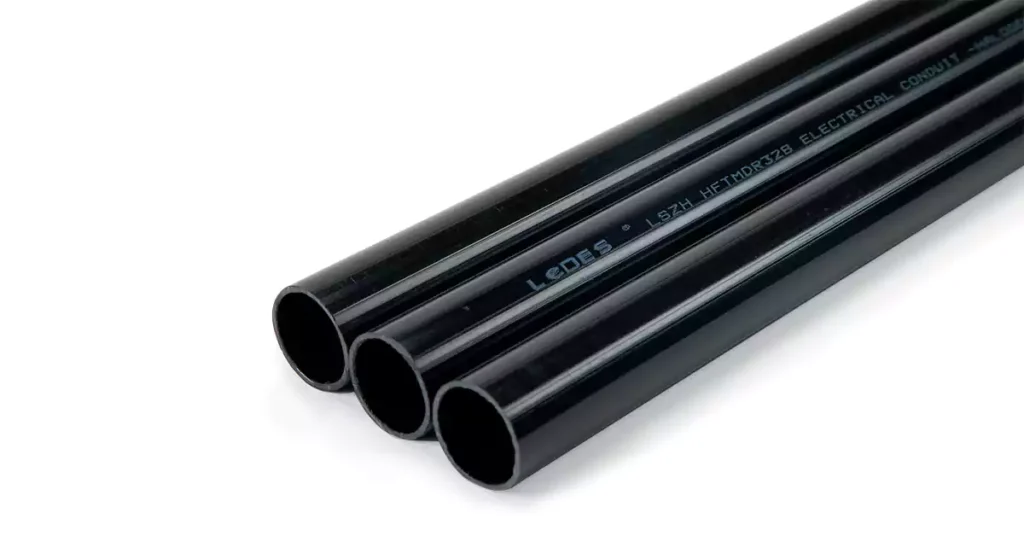
أنابيب التوصيل الكهربائية منخفضة الدخان والخالية من الهالوجين (LSZH) هي نوع من أنابيب التوصيل الكهربائية البلاستيكية المصنوعة من مواد لا تحتوي على الهالوجينات، مثل الكلور والفلور والبروم واليود. وعلى عكس أنابيب PVC التقليدية، التي قد تُطلق غازات ضارة عند احتراقها، صُممت أنابيب LSZH بحيث تُصدر أقل قدر من الدخان ولا تُطلق أي غازات هالوجينية سامة في حالة نشوب حريق.
وهذا يجعل قناة LSZH خيارًا مفضلًا للتطبيقات التي تكون فيها السلامة من الحرائق وجودة الهواء أمرًا بالغ الأهمية، كما هو الحال في الأماكن المغلقة والمباني العامة والأنفاق ومراكز البيانات.
ينتج دخاناً أقل بكثير مقارنة بأنابيب PVC التقليدية.
يعزز الرؤية أثناء حوادث الحريق، مما يساعد على الإخلاء الآمن.
يقلل من الأضرار الناجمة عن الدخان التي تلحق بالمعدات الإلكترونية الحساسة.
خالٍ من الكلور والفلور والبروم والهالوجينات الضارة الأخرى.
يمنع تكوّن الغازات المسببة للتآكل والسامة للغاية التي يمكن أن تضر بالأشخاص وتتلف المعدات.
مناسب للأماكن المغلقة حيث يكون الحفاظ على جودة الهواء أمراً بالغ الأهمية.
تم تصميم العديد من قنوات LSZH بحيث تتمتع بخصائص إطفاء ذاتي، مما يمنع انتشار اللهب.
يقلل من خطر انتشار الحريق عبر الأنظمة الكهربائية.
تُستخدم عادةً في الأنفاق والمستشفيات والمطارات ومراكز البيانات والمباني التجارية وأنظمة النقل.
يساعد على تلبية لوائح السلامة من الحرائق الصارمة والمعايير البيئية في البنية التحتية العامة.
ضروري للأماكن ذات الإشغال العالي أو التهوية المحدودة.
تعتبر أنابيب LSZH أكثر ملاءمة للبيئة من أنابيب PVC لأنها لا تطلق مواد خطرة في الهواء.
يفضل استخدامه في المشاريع التي تركز على شهادات المباني الخضراء والاستدامة.
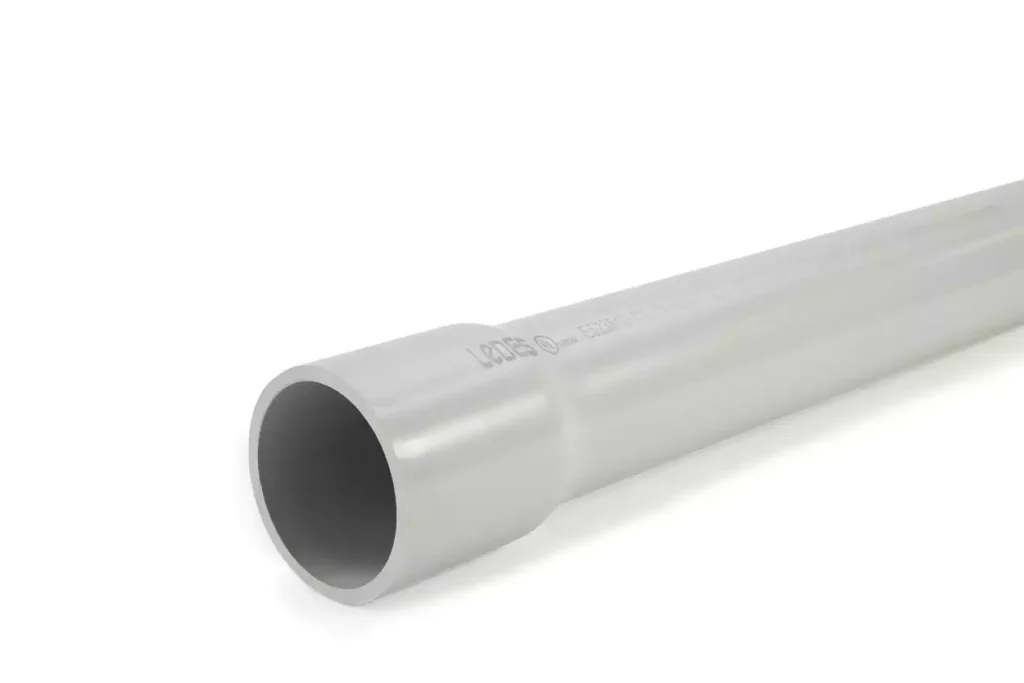
تُعدّ أنابيب البولي فينيل كلوريد (PVC) من أكثر أنواع أنابيب التوصيل الكهربائي استخدامًا، وهي معروفة بسعرها المعقول ومتانتها وسهولة تركيبها. مصنوعة من مادة PVC الصلبة، توفر هذه الأنابيب عزلًا ممتازًا ومقاومة للرطوبة والتآكل، مما يجعلها مناسبة لمختلف التطبيقات الكهربائية في المباني السكنية والتجارية والصناعية.
تتوفر أنابيب PVC بأحجام وتصنيفات مختلفة، مثل الجدول 40 والجدول 80، بالإضافة إلى أنواع متخصصة مثل DB2 للتركيبات تحت الأرض. وهي تُستخدم عادةً لحماية الأسلاك الكهربائية من التلف الميكانيكي والعوامل البيئية والتعرض للمواد الكيميائية.
يُعد هذا الخيار من أكثر خيارات المواسير الكهربائية بأسعار معقولة مقارنة بالمواسير المعدنية ومواسير LSZH.
متوفر بسهولة بأحجام وأنواع مختلفة، مما يسهل الحصول عليه لتطبيقات متنوعة.
يساهم انخفاض تكاليف المواد والعمالة في تركيبات كهربائية فعالة من حيث التكلفة.
مقاوم للتآكل والصدأ والتلف الكيميائي، مما يجعله مثالياً للبيئات الرطبة والمسببة للتآكل.
تتوفر خيارات مقاومة للأشعة فوق البنفسجية للتركيبات الخارجية المعرضة لأشعة الشمس.
يمكنه تحمل ظروف بيئية متنوعة، من الدفن تحت الأرض إلى الاستخدام فوق الأرض.
خفيف الوزن مقارنة بالأنابيب المعدنية، مما يقلل من تكاليف المناولة والعمالة.
يمكن قصها وتشكيلها وربطها بسهولة باستخدام مادة لاصقة مذيبة أو وصلات ملولبة.
لا يتطلب الأمر سوى أدوات متخصصة قليلة للتثبيت.
تعمل المواد غير الموصلة على التخلص من خطر الصدمات الكهربائية ومشاكل التأريض.
تتوفر نسخ مقاومة للحريق، على الرغم من أن أنابيب PVC القياسية يمكن أن تنبعث منها أبخرة سامة عند احتراقها.
يستخدم في الأنظمة الكهربائية السكنية والتجارية والصناعية.
مناسب للتركيبات فوق الأرض وتحت الأرض، بما في ذلك الدفن المباشر والتغليف بالخرسانة.
تُستخدم عادةً في تركيبات الطاقة الشمسية، والاتصالات السلكية واللاسلكية، وأنظمة التدفئة والتهوية وتكييف الهواء.
عند الاختيار بين أنابيب LSZH (منخفضة الدخان وخالية من الهالوجين) وأنابيب PVC (بولي فينيل كلوريد)، من الضروري فهم الاختلافات الأساسية بينهما. تختلف هذه المواد من حيث التركيب، والسلامة، ومقاومة الحريق، والامتثال للمعايير، والتركيب، والتكلفة، وغيرها، مما يؤثر على مدى ملاءمتها لمختلف التطبيقات.
نصائح احترافية: يمكنكم قراءة منشورنا الأخير لـ دليل المبتدئين لأنابيب LSZH أولاً، إذا كنت تجد صعوبة في فهم المحتوى التالي.
تُصنع أنابيب LSZH من مركبات لدن بالحرارة أو مركبات متصلبة بالحرارة خاصة لا تحتوي على الهالوجينات مثل الكلور والفلور والبروم واليود. والهدف الأساسي من مواد LSZH هو تقليل الانبعاثات السامة ومنع تكوّن الغازات المسببة للتآكل عند تعرضها للحريق.
تم تصميم مواد LSZH باستخدام إضافات بديلة مثبطة للهب مثل:
- هيدروكسيد الألومنيوم (Al(OH)₃) – يطلق بخار الماء عند تسخينه، مما يساعد على إخماد النيران.
- هيدروكسيد المغنيسيوم (Mg(OH)₂) – يوفر امتصاصًا للحرارة ويقلل من إنتاج الدخان.
- المركبات القائمة على الفوسفور – تعزيز مقاومة الحريق مع الحفاظ على المرونة الميكانيكية.
لا تنتج هذه المواد أبخرة أكالة عند احتراقها، مما يجعل أنابيب LSZH خيارًا أكثر أمانًا في الأماكن المغلقة ومراكز النقل والبنية التحتية الحيوية حيث تعتبر جودة الهواء أولوية.
تُصنع أنابيب PVC من كلوريد البولي فينيل، وهو بوليمر بلاستيكي صناعي يحتوي على الكلور. ورغم أن PVC مقاوم للاشتعال بطبيعته بفضل خاصية الإطفاء الذاتي، إلا أنه يُطلق غازات هالوجينية سامة مثل كلوريد الهيدروجين (HCl) عند احتراقه.
تشكل هذه الغازات مخاطر صحية جسيمة، إذ يمكن أن تسبب تهيجًا حادًا في الجهاز التنفسي وتساهم في التآكل الحمضي عند اختلاطها بالماء. وهذا مصدر قلق بالغ في البيئات الحساسة كمراكز البيانات والمستشفيات والأنفاق، حيث تُعد سلامة المعدات والأفراد أولوية قصوى.
- إنتاج دخان ضئيل – يحسن الرؤية لضمان الإخلاء الآمن.
- لا يحتوي على غازات هالوجين سامة – يقلل من المخاطر الصحية ويمنع تلف المعدات الإلكترونية.
- لا ينتج غازات حمضية أكالة - يمنع حدوث أضرار هيكلية طويلة الأمد للبنية التحتية.
- يتوافق مع معايير السلامة من الحرائق مثل IEC 60754 و IEC 61386 و UL 94.
بسبب هذه الخصائص، غالباً ما تكون قنوات LSZH مطلوبة في المناطق عالية الخطورة مثل أنظمة مترو الأنفاق والمطارات والسفن البحرية ومرافق الاتصالات حيث يجب تقليل مخاطر الحريق إلى الحد الأدنى.
- مقاوم للاشتعال بشكل طبيعي – يمكن أن تنطفئ ذاتياً عند إزالة مصدر الحرارة.
- يُطلق دخاناً كثيفاً وغازات سامة – يزيد من مخاطر الاختناق ومشاكل الرؤية.
- انبعاثات كلوريد الهيدروجين - يُكوّن حمض الهيدروكلوريك عند تعرضه للرطوبة، مما يؤدي إلى تلف شديد في المعادن والأنظمة الكهربائية.
- يلتزم بالمعايير مثل متطلبات UL 651 و NEC للاستخدام العام، ولكنها ليست مثالية للتطبيقات الحساسة للحريق.
على الرغم من أن أنابيب PVC مقبولة للعديد من التركيبات الكهربائية، إلا أنها قد لا تكون مناسبة للأماكن التي تشكل فيها السلامة من الحرائق وجودة الهواء ومخاطر تعرض الإنسان مخاوف رئيسية.
يُعدّ الالتزام بمعايير الصناعة أمراً بالغ الأهمية لضمان السلامة والمتانة والأداء. يجب أن تستوفي كل من أنابيب LSZH وأنابيب PVC متطلبات تنظيمية محددة لاستخدامها في مختلف التركيبات الكهربائية.
تخضع مواسير LSZH بشكل أساسي لمعيار IEC 61386، الذي يحدد متطلبات الأداء الميكانيكي والكهربائي لأنظمة المواسير. ويُعتبر معيار IEC 61386-1 المعيار العام للأداء، بينما يُستخدم معيار IEC 61386-21 تحديدًا للمواسير الصلبة، ومعيار IEC 61386-23 للمواسير المموجة.
بموجب معيار IEC 61386، يتم تصنيف القنوات بناءً على مستويات أداء مختلفة، والتي يتم الإشارة إليها من خلال سلسلة من الأرقام المكونة من رقمين في المعيار.
ملحوظات: أما بالنسبة لـ معيار IEC 61386 لأنابيب التوصيل الكهربائية, لقد كتبنا منشورًا سابقًا لشرح المزيد من التفاصيل؛ يمكنك قراءة منشورنا الأخير.
يشمل التصنيف ما يلي:
- بالقوة الميكانيكية (مثل الضغط، والصدمات، وقوة الشد، وقدرة التحميل):
خفيف جداً، خفيف، متوسط، ثقيل، ثقيل جداً.
- بالمرونة: قناة صلبة ومرنة.
- حسب قابلية الاشتعال: غير قابل لانتشار اللهب وقابل لانتشار اللهب.
وعوامل أخرى مثل القدرة على تحمل درجات الحرارة المنخفضة والعالية، والخصائص الكهربائية، ومقاومة الماء، ومقاومة التآكل، وما إلى ذلك.
متطلبات الأداء:
تحدد المواصفة القياسية الدولية IEC 61386-1 مجموعة من الاختبارات الميكانيكية والكهربائية والبيئية التي يجب أن تجتازها أنابيب LSZH لضمان موثوقيتها في التركيبات الكهربائية. وتشمل الاختبارات الرئيسية ما يلي:
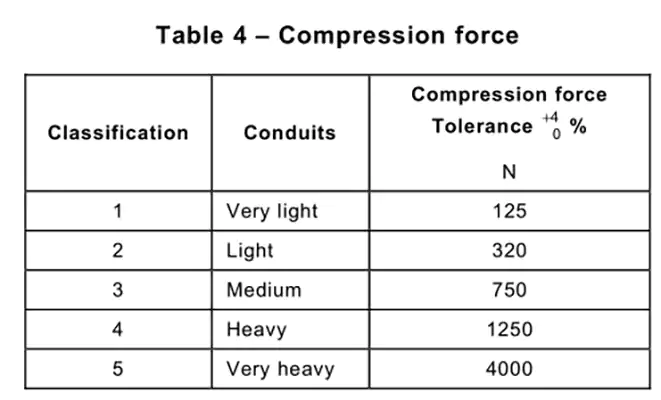
اختبار قوة الضغط:
يقيس هذا الجهاز مقدار القوة التي يمكن أن يتحملها الأنبوب قبل أن يتشوه أو يفشل تحت الضغط.
يتضمن ذلك قوى مختلفة لأنواع مختلفة من المواسير:
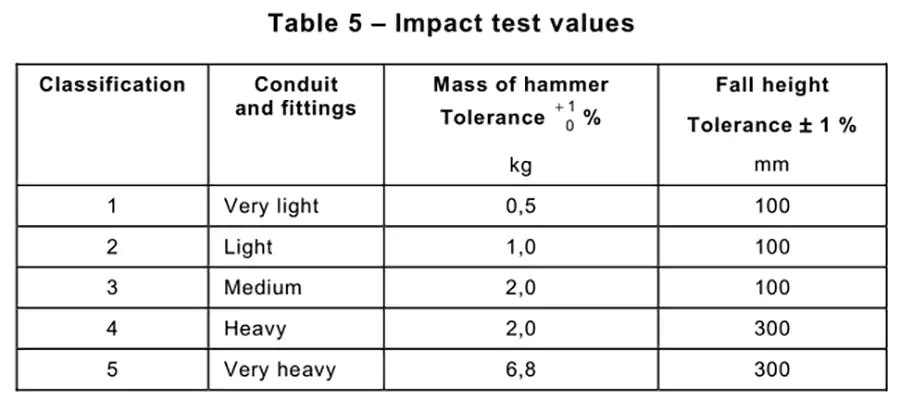
اختبار مقاومة الصدمات:
يقيّم هذا الاختبار قدرة الأنبوب على امتصاص الصدمات الميكانيكية، بما في ذلك الاختبارات التي تُجرى في درجات حرارة منخفضة لضمان متانته في البيئات الباردة. ويُبين الجدول كتلة الصدمة المطبقة وارتفاعها.
قوة الشد:
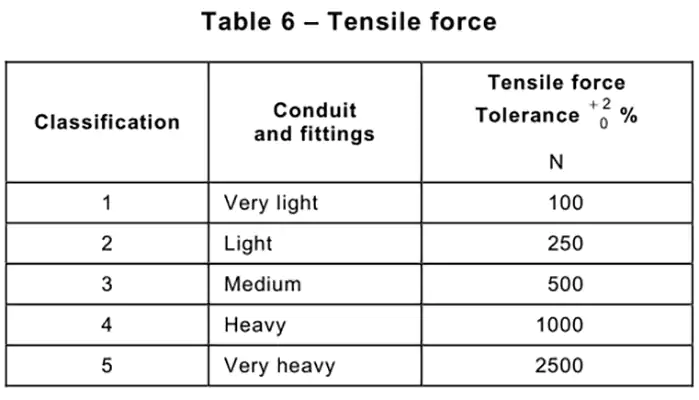
يقيس هذا الجهاز مقاومة الأنبوب لقوى السحب، مما يضمن بقاءه سليماً أثناء سحب الكابل. تُطبَّق قوة شد (قوة سحب) بسرعة مضبوطة حتى ينكسر الأنبوب أو يتمدد إلى ما يتجاوز الحدود المسموح بها.
نصائح احترافية: نشرح تفاصيل حول مقاومة الصدمات وقوة الشد في المنشور الأخير؛ يمكنك قراءته إذا كنت مهتمًا بهذا الجزء.
مقاومة العزل الكهربائي:
يضمن أن يوفر الموصل مقاومة كهربائية عالية لمنع حدوث دوائر قصر.
يتم تطبيق جهد عالٍ (على سبيل المثال، من 1000 فولت إلى 2000 فولت) بين السطح الداخلي والخارجي للقناة.
يجب ألا يسمح الأنبوب بمرور التيار أو التسرب.
اختبار مقاومة الحريق:
يقيّم رد فعل القناة تجاه النار، ولا تنشر اللهب.
نصائح احترافية: أما فيما يتعلق بـ قياس أداء مقاومة الحريق, كما ناقشنا في المنشور السابق، يمكنك قراءته إذا كنت مهتمًا بهذا الجزء.
- اختبار السلك المتوهج (IEC 60695-2-11):
يتم وضع سلك متوهج بدرجة حرارة 750 درجة مئوية على الأنبوب في وضع رأسي.
يمر الموصل إذا لم يكن هناك لهب مرئي، أو إذا انطفأت النيران من تلقاء نفسها في غضون 30 ثانية.
- اختبار اللهب بالكيلوواط (IEC 60695-11-2):
يتم تثبيت عينة من الأنابيب بطول 675 مم بشكل عمودي وتعريضها لشعلة بقوة 1 كيلو واط بزاوية 45 درجة.
يضمن الاختبار أن تنطفئ النيران ذاتيًا في غضون 30 ثانية ولا تشعل ورق المناديل الموضوع أسفلها.
يتضمن ذلك الأداء للأنابيب الصلبة، بما في ذلك الأنابيب المعدنية وغير المعدنية.
تشمل الاختبارات الرئيسية ما يلي:
اختبار الضغط: راجع الاختبار الوارد في معيار IEC 61386-1.
اختبار الانحناء:
يحدد المرونة ومقاومة التشقق.
بالنسبة للأنابيب غير المعدنية، يتم اختبار الأحجام 16 و20 و25 والأنابيب المركبة باستخدام جهاز الانحناء، وبعد الاختبار، يجب ألا تظهر الأنابيب أي تشققات مرئية ويجب أن يكون من الممكن اجتياز المقياس المناسب.
اختبار الانهيار:
يقيس اختبار الانهيار الثبات الميكانيكي للأنابيب غير المعدنية والمركبة، وخاصة تلك القابلة للانحناء. يضمن هذا الاختبار احتفاظ الأنبوب بمساره الداخلي بعد تعرضه للحرارة، مما يمنع الانسدادات التي قد تعيق التركيبات الكهربائية.
يتم ثني الأنبوب وفقًا لمتطلبات الثني القياسية دون استخدام أدوات مساعدة. ثم يُثبّت على دعامة صلبة باستخدام أربعة أشرطة. ويُعرّض الأنبوب لحرارة لمدة 24 ساعة.
- بعد التسخين، يتم وضع الدعامة بحيث تشكل القناة زاوية 45 درجة مع الوضع الرأسي، مع توجيه أحد طرفيها لأعلى والآخر لأسفل.
- يتم إدخال مقياس معياري في الطرف العلوي ويجب أن يمر عبر القناة تحت وزنه الخاص دون أي قوة أولية.
يضمن هذا الاختبار أن تحافظ قنوات LSZH على سلامتها الداخلية في ظل ظروف درجات الحرارة العالية.
اختبار الشد: كما هو موضح في معيار IEC 61386-1.
عرض النار: كما هو موضح في معيار IEC 61386-1.
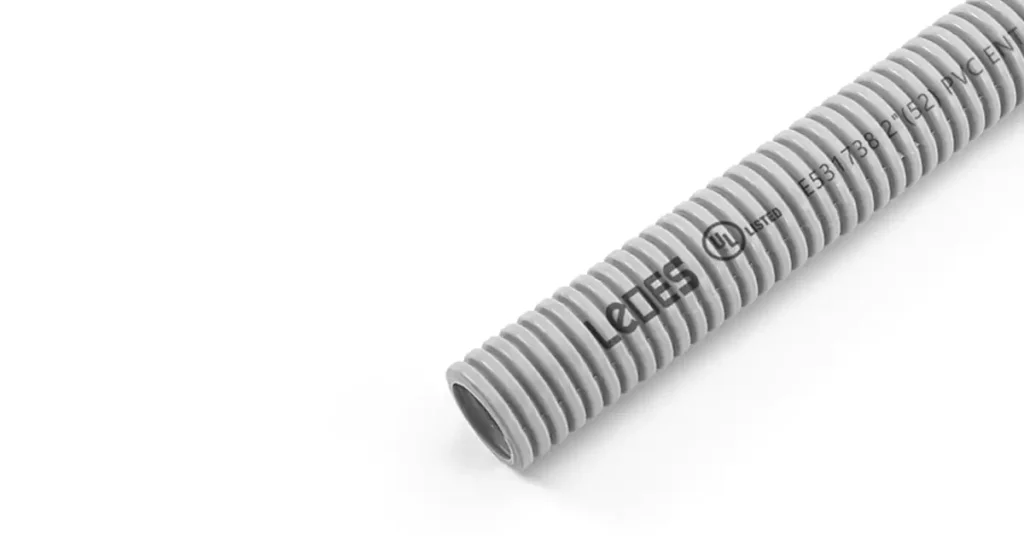
هذا المعيار مخصص بشكل خاص للأنابيب المرنة، ويتم دمجه مع الجزء الأول من معيار اللجنة الكهروتقنية الدولية (IEC) لتحديد متطلبات الأنابيب.
تشمل المتطلبات الميكانيكية ما يلي:
اختبار الضغط: كما هو موضح في معيار IEC 61386-1.
اختبار المرونة:
يقيس اختبار الانحناء المتانة الميكانيكية ومرونة أنابيب LSZH تحت تأثير حركات الانحناء المتكررة. يضمن هذا الاختبار قدرة الأنبوب ووصلاته على تحمل الإجهاد الميكانيكي أثناء التركيب والتشغيل دون تشقق أو فقدان مساره الداخلي.
- يتم تثبيت الأنبوب على جهاز متذبذب يحركه ذهابًا وإيابًا بزاوية 180 درجة حول محور رأسي.
- يخضع التجميع لـ 5000 دورة انثناء بمعدل 40 ± 5 انثناءات في الدقيقة بحركة جيبية.
- بعد الاختبار، يجب ألا تظهر القناة أي تشققات مرئية تحت الرؤية العادية.
- يجب أن يكون المقياس القياسي قادراً على المرور عبر القناة تحت وزنه الخاص دون قوة إضافية.
قوة الشد، مقاومة الحريق: راجع IEC 61386-1.
المعيار الأوروبي EN 50267-2 يحدد طريقة قياس حموضة وتآكل الغازات المنبعثة أثناء احتراق المواد غير المعدنية، مثل أنابيب LSZH (منخفضة الدخان وخالية من الهالوجين). ويُقيّم هذا المعيار ما إذا كانت هذه المواد تُنتج انبعاثات منخفضة الحموضة وغير قابلة للتآكل، مما يضمن ملاءمتها للتطبيقات الحساسة للحريق، مثل مراكز البيانات والأنفاق وأنظمة النقل.
طريقة وإجراءات الاختبار:
المبدأ العام
تُحرق كمية محددة مسبقاً من مادة الاختبار في فرن أنبوبي تحت ظروف مضبوطة. تُجمع الغازات المنبعثة أثناء الاحتراق وتُذاب في ماء مقطر أو منزوع المعادن، ثم تُقاس حموضتها (الأس الهيدروجيني) وموصليتها الكهربائية.
يجب أن يتمتع الماء المستخدم في امتصاص الغاز بالخصائص التالية:
- الرقم الهيدروجيني: 6.5 ± 1.0
- الموصلية: ≤ 0.5 ميكروسيمنز/مم
تضمن هذه المتطلبات الصارمة دقة الاختبار.
طريقة اختبار
عملية الاحتراق
يتم حرق عينة من المادة وزنها 1000 ملغ في فرن أنبوبي عند درجة حرارة 935 درجة مئوية تحت تدفق هواء متحكم فيه.
يتم جمع الغازات المنبعثة في الماء المقطر أو الماء منزوع المعادن.
قياس الحموضة والتوصيل الكهربائي
يتم قياس مستوى الرقم الهيدروجيني للمحلول لتحديد درجة الحموضة.
يتم قياس الموصلية لتقييم احتمالية تآكل الغاز.
معايير النجاح/الرسوب
تجتاز المادة الاختبار إذا ظل الرقم الهيدروجيني أعلى من حد معين (≥4.3) وظلت الموصلية ضمن النطاق المسموح به.
في حال فشل إحدى العينات، يتم إجراء اختبارات إضافية لتأكيد النتائج.
يضمن هذا الاختبار أن قنوات LSZH تلبي متطلبات السلامة من الحرائق عن طريق تقليل انبعاثات الغازات الحمضية الضارة، مما يقلل من المخاطر التي يتعرض لها الأشخاص والمعدات.
تحدد المواصفة القياسية الدولية IEC 60754-1 طريقة تحديد كمية غازات حمض الهالوجين المنبعثة أثناء احتراق المواد غير المعدنية، مثل مواد العزل والتغليف للكابلات الكهربائية. يُعد هذا الاختبار ضروريًا لتقييم احتمالية تآكل المواد وسميتها في ظروف الحريق.
ملخص طريقة الاختبار
- عملية الاحتراق
- يتم وضع عينة الاختبار في أنبوب زجاجي من الكوارتز وتسخينها في فرن أنبوبي عند درجة حرارة 800 ± 10 درجة مئوية تحت تدفق هواء متحكم فيه.
- يتم تجميع الغازات المنبعثة أثناء الاحتراق في محلول مائي.
- تحديد محتوى حمض الهالوجين
- يتم إجراء اختبار فارغ أولاً كمرجع.
- يتم معالجة المحلول المجمع بكواشف محددة ومعايرته باستخدام ثيوسيانات الأمونيوم لتحديد محتوى حمض الهالوجين.
- يتم حساب كمية الحمض بالمليغرام من حمض الهيدروكلوريك لكل غرام من مادة الاختبار.
- معايير التقييم
إذا كان محتوى حمض الهالوجين ≤ 5 ملغم/غ، فإن المادة تعتبر منخفضة في أحماض الهالوجين، مما يجعلها أكثر أمانًا للاستخدام في البيئات الحساسة.
يساعد هذا المعيار على ضمان أن المواد المستخدمة في كابلات الكهرباء والاتصالات تنتج الحد الأدنى من الانبعاثات المسببة للتآكل والسامة، مما يحسن السلامة من الحرائق في المباني والأنفاق والأماكن العامة.
تحدد المواصفة القياسية الدولية IEC 60754-2 طريقة تحديد حموضة (الأس الهيدروجيني) وموصلية الغازات المنبعثة أثناء احتراق المواد غير المعدنية المستخدمة في كابلات الألياف الكهربائية والبصرية. يقيّم هذا الاختبار مدى قابلية هذه المواد للتآكل وتأثيرها البيئي في ظروف الحريق.
نظرة عامة على إجراءات الاختبار
عملية الاحتراق
- يتم وضع العينة في أنبوب زجاجي من الكوارتز وتسخينها في فرن أنبوبي عند درجة حرارة 935 ± 30 درجة مئوية تحت تدفق هواء متحكم فيه.
- يتم نقل الغازات المنبعثة أثناء الاحتراق بواسطة تدفق الهواء وتجميعها في محلول مائي على مدى 30 ± 1 دقيقة.
تحضير المحلول وقياسه
- يتم تخفيف المحلول المجمع، بما في ذلك أي بقايا من الجهاز، إلى 1000 مل للتحليل.
- يتم قياس قيمة الرقم الهيدروجيني باستخدام مقياس الرقم الهيدروجيني المعاير، ويتم تحديد الموصلية باستخدام مقياس الموصلية، وكلاهما عند 25 ± 1 درجة مئوية.
تقييم النتائج
- يتم حساب متوسط قيم الأس الهيدروجيني والتوصيل الكهربائي من خلال اختبارات متعددة.
- إذا كان التباين مرتفعًا جدًا (>5%)، فستكون هناك حاجة إلى اختبارات إضافية.
- يمكن تقدير قيم الأس الهيدروجيني والتوصيلية المرجحة بناءً على تكوين المواد في الكابل الكامل.
معايير الأداء
ينبغي أن تتوافق قيم الأس الهيدروجيني والتوصيلية المقبولة مع معايير الكابلات الفردية أو الحدود الموصى بها في الملحق أ من المعيار.
تحدد المواصفة القياسية IEC 61034-2 طريقة قياس كثافة الدخان الناتج عن احتراق الكابلات في ظروف مُحكمة. وتكتسب هذه المواصفة أهمية خاصة بالنسبة لأنابيب التوصيل منخفضة الدخان والخالية من الهالوجين (LSZH)، إذ تضمن انبعاث الحد الأدنى من الدخان في حالة نشوب حريق، مما يُحسّن الرؤية اللازمة للإخلاء ويُقلل من المخاطر المرتبطة بالدخان.
يتضمن الاختبار وضع عينة الاختبار أفقيًا على ارتفاع 150 مم فوق صينية كحول، والتي تعمل كمصدر للنار. قبل الاشتعال، يكون غلاف الاختبار مُكيّف عند درجة حرارة 25 درجة مئوية ± 5 درجة مئوية, ويمكن إجراء اختبار فارغ. اشتعل الكحول, ويتم قياس الدخان المتولد عن طريق نفاذية الضوء على سطح الاختبار مدة تصل إلى 40 دقيقة. يتم تسجيل الحد الأدنى لنفاذية الضوء، وتشير النسبة المئوية الأعلى إلى أداء أفضل.
للامتثال للمعيار IEC 61034-2، يجب أن تحافظ قنوات LSZH على الحد الأدنى لنفاذية الضوء العتبة، عادةً أعلى 60%, مما يقلل من حجب الرؤية في حالات الحريق. بعد الاختبار، يتم استخلاص نواتج الاحتراق، مما يضمن الدقة في الاختبارات اللاحقة.
يُعدّ اختبار ASTM E662-17a طريقة اختبار قياسية تُستخدم لقياس الكثافة الضوئية النوعية للدخان الناتج عن المواد الصلبة، مثل البلاستيك والكابلات والأنابيب، في ظل ظروف حريق مُتحكّم بها. يُعدّ هذا الاختبار مهمًا للأنابيب منخفضة الدخان والخالية من الهالوجين (LSZH)، حيث يُقيّم مستويات إنتاج الدخان فيها ويُساعد في تحديد مدى ملاءمتها للبيئات الحساسة للحريق، مثل الأنفاق ومراكز البيانات والمباني العامة.
ملخص طريقة الاختبار
- غرفة الاختبار ووضع العينة
يتم إجراء الاختبار في غرفة مغلقة (غرفة كثافة الدخان) باستخدام شعاع ضوئي وكاشف ضوئي لقياس كثافة الدخان.
يتم وضع عينة من مادة الاختبار على حامل داخل الحجرة.
- عملية الاحتراق
يتم تعريض العينة لمصدر حرارة في إحدى الحالتين التاليتين:
وضع اللهب: التعرض المباشر للهب.
الوضع غير المشتعل: التعرض للحرارة الإشعاعية دون اشتعال مباشر.
- قياس كثافة الدخان
يتم حساب الكثافة البصرية النوعية (Ds) بناءً على كمية الضوء التي يحجبها الدخان داخل الحجرة.
يتم تسجيل الحد الأقصى للكثافة البصرية النوعية (Ds max).
- معايير الأداء
تعتبر المواد ذات قيم Ds max المنخفضة أفضل من حيث انخفاض انبعاث الدخان.
يجب أن يكون لمواد LSZH قيمة Ds max ضمن الحدود المقبولة لاستخدامها في التطبيقات الحساسة للسلامة.
يضمن معيار ASTM E662-17a أن أنابيب LSZH تُنتج الحد الأدنى من الدخان، مما يُحسّن السلامة من الحرائق والرؤية في حالات الطوارئ. ويُستخدم هذا المعيار على نطاق واسع إلى جانب معيار IEC 61034-2 لتقييم أداء المواد الكهربائية فيما يتعلق بالدخان.
تحدد المواصفة القياسية ISO 4589-2 طريقة لتحديد الحد الأدنى لتركيز الأكسجين اللازم لدعم احتراق المواد البلاستيكية في ظروف درجة الحرارة المحيطة. ويُعرف هذا باسم مؤشر الأكسجين المحدود (LOI) ويتم التعبير عنها كنسبة مئوية. كلما ارتفعت قيمة LOI، زادت مقاومة المادة للاحتراق في الظروف الجوية العادية.
يُعد هذا الاختبار ضروريًا لتقييم مقاومة أنابيب LSZH وغيرها من المواد البلاستيكية المستخدمة في التطبيقات الكهربائية والإنشائية للحريق. تتميز المواد ذات مؤشر الأكسجين المحدود (LOI) الأعلى بمقاومة أكبر للهب، مما يوفر أداءً أفضل في مجال السلامة من الحرائق.
تحدد المواصفة القياسية ISO 19700 طريقة موحدة لتقييم المكونات الخطرة لمخلفات الحرائق. وتركز هذه المواصفة على قياس الغازات السامة المنبعثة أثناء احتراق المواد في ظروف حريق مضبوطة. وتساعد هذه الطريقة في تقييم المخاطر المحتملة للمواد المستخدمة في تطبيقات متنوعة، بما في ذلك المواسير الكهربائية، مما يضمن الامتثال لمعايير السلامة من الحرائق.
ملخص طريقة الاختبار
جهاز الاختبار: يتم استخدام فرن أنبوبي ذو حالة مستقرة لمحاكاة ظروف الحريق المختلفة عن طريق تغيير نسبة التكافؤ (نسبة الوقود إلى الأكسجين المتاح).
إجراء الاختبار:
- يتم وضع مادة الاختبار في فرن الأنبوب، حيث تخضع لعملية احتراق مضبوطة.
- تتراوح ظروف الحريق من جيدة التهوية إلى سيئة التهوية، مما يحاكي سيناريوهات الحرائق الواقعية.
- يتم جمع غازات الاحتراق وتحليلها بحثًا عن مكونات سامة مثل أول أكسيد الكربون (CO) وثاني أكسيد الكربون (CO₂) وسيانيد الهيدروجين (HCN) وكلوريد الهيدروجين (HCl) وأنواع خطرة أخرى.
تقييم النتائج: تساعد تركيزات الغاز المقاسة في تحديد سمية الحريق، مما يسمح بتصنيف المواد بناءً على احتمالية خطر الحريق.
تعتبر المواصفة القياسية ISO 19700 ضرورية لتقييم المواد منخفضة الدخان والخالية من الهالوجين (LSZH)، مما يضمن إطلاقها الحد الأدنى من الغازات السامة في حالة نشوب حريق، مما يجعلها أكثر أمانًا للبيئات المغلقة مثل المباني وأنظمة النقل.
UL 94 is a widely recognized flammability standard that evaluates the burning behavior of plastic materials used in electrical and electronic applications. This standard is crucial for assessing the fire safety performance of Low Smoke Zero Halogen (LSZH) conduit, ensuring it meets stringent fire resistance requirements while minimizing toxic emissions in case of fire.
غاية
The primary goal of UL 94 is to classify plastics based on their burning behavior, offering insights into their suitability for various applications where fire resistance is essential.
Ratings and Requirements
L 94 classifies plastics into several categories, each with specific criteria:
- HB (Horizontal Burning):
طريقة اختبار: A specimen is positioned horizontally and exposed to a flame for 30 seconds or until the flame reaches a specified mark. The burn rate is then measured.
معايير: For materials 3 to 13 mm thick, the burn rate must not exceed 40 mm per minute; for those less than 3 mm thick, it must not exceed 75 mm per minute.
تصنيف: HB indicates slow burning on a horizontal specimen.
- Vertical Burning (V-0, V-1, V-2):
طريقة اختبار: A vertically oriented specimen undergoes two 10-second flame applications. After each application, after flame and afterglow times are recorded, along with observations of dripping particles.
معايير:
V-0: Flame extinguishes within 10 seconds; no flaming drips allowed.
V-1: Flame extinguishes within 30 seconds; no flaming drips allowed.
V-2: Flame extinguishes within 30 seconds; flaming drips are permitted.
- Vertical Burning, Severe Test:
طريقة اختبار: Specimens are subjected to five 5-second flame applications with a more severe ignition source.
معايير:
5VA: Flame extinguishes within 60 seconds; no burn-through (no hole) in the specimen.
5VB: Flame extinguishes within 60 seconds; burn-through (hole) is allowed.
These classifications assist manufacturers in choosing suitable plastic materials to ensure compliance with safety standards and regulatory requirements.
تقييم | Orientation | Flame Application | متطلبات | Dripping Allowed? | Burn-Through Allowed? |
HB | Horizontal | Burning rate of less than 76mm/min for a specimen less than 3mm thick and burning stops before 100mm | |||
V-2 | Vertical | 30 seconds | Burning stops within 30 sec; flaming drips allowed | نعم | لا |
V-1 | Vertical | 30 seconds | Burning stops within 30 sec; drips of particles allowed as long as they are not inflamed. | لا | لا |
V-0 | Vertical | 10 seconds | Burning stops within 10 sec; drips of particles allowed as long as they are not inflamed. | لا | لا |
5VB | Vertical | 60 seconds | Burning stops within 60 sec; no flaming drips; holes allowed | لا | نعم |
5VA | Vertical | 60 seconds | Burning stops within 60 sec; no flaming drips; no holes | لا | لا |
Ledes’ قنوات LSZH are engineered with a focus on superior fire safety. Achieving UL 94 V-0 and 5VA ratings, they ensure:
V-0 Rating: Rapid self-extinguishment within 10 seconds without flaming drips, suitable for applications requiring high flame resistance.
5VA Rating: Exceptional performance under severe flame conditions, with no burn-through, making them ideal for critical safety applications.
These attributes make Ledes LSZH conduits a reliable choice for environments where fire safety and minimal smoke emission are paramount.
UL 1685 is a standard developed to evaluate the flame propagation and smoke release characteristics of electrical and optical-fiber cables when exposed to fire conditions. This standard incorporates two primary test methods: the UL Flame Exposure Test و ال FT4/IEEE 1202 Type of Flame Exposure Test.
▲ Flame Exposure Test
The UL 1685 Flame Exposure Test evaluates the fire performance of electrical cables by assessing flame spread and smoke production.
إعداد الاختبار
A propane-gas burner with a flat metal plate and 242 small holes creates a controlled flame.
The burner is positioned 3 inches (76 mm) from the cable tray, with the flame centered between two tray rungs.
Flowmeters monitor propane and air supply, ensuring accurate gas flow.
إجراءات الاختبار
- تحضير: The cables, test area, and equipment are set to a minimum temperature of 41°F (5°C).
- تطبيق اللهب:
The burner ignites, and gas flows are adjusted.
The flame is applied continuously for 20 minutes.
- ملاحظة:
The flame height and burning duration are recorded.
Once the burner is turned off, any remaining fire is allowed to self-extinguish.
- Damage Assessment:
Cables are cleaned, and char height is measured.
Additional damage like melting is also recorded.
Smoke Measurement
- A photometer system tracks smoke levels in the exhaust duct.
- The Smoke Release Rate (SRR) and total smoke released over 20 minutes are calculated.
معايير القبول
To pass the UL 1685 test, the cable must meet the following limits:
Char height: Less than 8 feet (244 cm).
Total smoke released: No more than 95 m².
Peak smoke release rate: No more than 0.25 m²/s.
▲ FT4/IEEE 1202 Flame Exposure Test
The FT4/IEEE 1202 Flame Exposure Test is a vertical-tray fire test used to evaluate the flame propagation and smoke release characteristics of electrical and optical-fiber cables. It helps determine whether cables meet fire safety requirements, particularly for limited smoke marking applications.
ملخص طريقة الاختبار
- إعداد الاختبار
- The test specimen is placed in a vertical cable tray inside an enclosure with proper ventilation.
- A propane-gas ribbon burner with a 242-hole flame array is used as the ignition source.
- The burner is positioned at a 20° angle, 12 inches (305 mm) above the tray base, and 3 inches (75 mm) from the cable surface.
- Flame Application
- The burner is ignited, and the flame is applied continuously for 20 minutes.
- Gas flow is controlled to 28 ±1 standard cubic feet per hour for propane and 163 ±10 standard cubic feet per hour for air.
- Smoke and Damage Evaluation
- A photometer system measures smoke density in the exhaust duct.
- After the test, the char height and other visible damage on the cables are measured.
- معايير القبول
- Char height must be less than 4 ft, 11 inches (1.5 m) from the lower edge of the burner.
- Total smoke released must not exceed 150 m² in 20 minutes.
- Peak smoke release rate must not exceed 0.40 m²/s.
The FT4/IEEE 1202 test ensures that cables used in buildings, tunnels, and industrial environments have controlled flame spread and low smoke emission, improving overall fire safety.
Similarities and Differences Between These Two Flame Exposure Tests
Similarities:
- غاية: Both tests evaluate the flame resistance of electrical cables and conduits under standardized fire conditions.
- إعداد الاختبار: Cables and conduits are mounted in a vertical steel ladder tray, which is 12 inches wide, 3 inches deep, and 96 inches long, with 1-inch rungs spaced 9 inches apart.
- Flame Applications: A ribbon burner using a propane-air mixture applies flame for 20 minutes at a power output of 70,000 Btu/hr.
- Burning Duration: A cable may continue burning after the flame is removed, but the test is not complete until the cable stops burning.
- Smoke Test (Optional): Both tests include an optional smoke measurement where smoke release is evaluated using a photometer system.
وجه | UL Flame Exposure Test | FT4/IEEE 1202 Flame Exposure Test |
Standard Reference | UL 1685 (General Method) | UL 1685 (FT4/IEEE 1202 Method) |
Primary Application | Used for U.S. cable and conduit compliance | Required for Canada (FT4-rated cables and conduits) and some U.S. markets |
Burner Position | Horizontally placed, 3 inches from the cable surface, 18 inches from the bottom of the tray | Angled at 20°, 3 inches from the surface of the tray, and 12 inches from the bottom of the tray |
معايير النجاح/الرسوب | Char height must be less than 8 feet (244 cm) | Char height must be less than 4 feet, 11 inches (1.5 m) (More stringent requirement) |
Total Smoke Released (Optional Test) | Must not exceed 95 m² | Must not exceed 150 m² |
Peak Smoke Release Rate (Optional Test) | Must not exceed 0.25 m²/s | Must not exceed 0.40 m²/s |
Both tests ensure that electrical cables meet fire safety standards and help minimize risks in buildings, tunnels, and public spaces.
NFPA 130 is a National Fire Protection Association standard that establishes fire protection and life safety requirements for various components of rail transit systems, including stations, trainways, vehicles, and related infrastructure. Its primary objective is to ensure a reasonable degree of safety for passengers and personnel in the event of a fire.
NFPA 130 includes specific fire performance requirements for electrical components, including conduits and cables, to limit fire spread and reduce smoke generation in enclosed transit environments. LSZH (Low Smoke Zero Halogen) conduits are commonly used in these applications due to their fire-resistant properties and low toxicity during combustion.
Here are some key requirements to LSZH conduit:
Flame Spread and Smoke Emission: Electrical cables and conduits used in transit systems must pass strict flame propagation and smoke release tests, such as the FT4/IEEE 1202 flame test and UL 1685 smoke release test, to ensure minimal fire spread and reduced smoke hazards.
Durability in Harsh Environments: NFPA 130 requires electrical systems to withstand high temperatures and moisture exposure, ensuring safety in both normal and emergency conditions. LSZH conduits, known for their high heat resistance and non-corrosive properties, help meet these durability standards.
Material Considerations: While NFPA 130 does not specifically mandate LSZH materials, it emphasizes the need for non-combustible and low-smoke-emitting components. LSZH conduits align with these criteria by eliminating halogens and reducing toxic gas emissions, which improves visibility and minimizes health risks during fire events.
NFPA 130 serves as a critical guideline for fire safety in transit infrastructure, requiring electrical components to meet stringent fire performance criteria. While LSZH conduit is not explicitly required, its low-smoke and halogen-free properties make it a preferred choice in compliance with NFPA 130’s fire safety objectives.
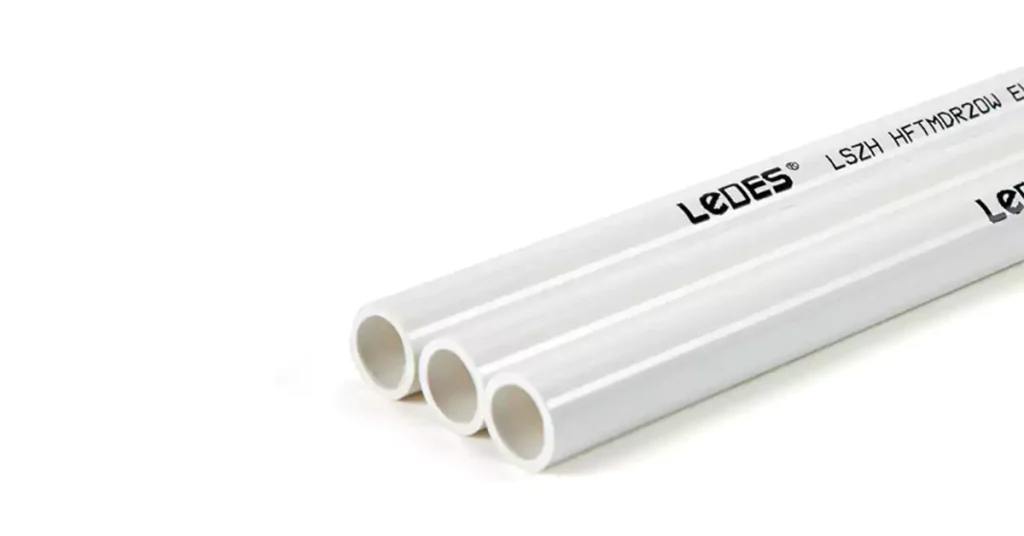
When it comes to electrical installations, it is crucial that PVC conduits meet stringent standards to ensure safety, durability, and performance. These standards are set by various organizations across the globe, each with its own set of regulations to govern PVC conduit performance in different environmental conditions. Below, we’ll summarize the key codes for PVC conduits in America, Canada, and Australia.
- UL 651: This standard covers Schedule 40 and 80 Rigid PVC Conduit for use in electrical wiring. It specifies requirements for strength, flame resistance, and other physical properties to ensure safety in installations.
- UL 1653: This standard applies to Electrical Nonmetallic Tubing (ENT), not rigid PVC conduit. It specifies construction and performance requirements for ENT systems used in electrical installations.
ملحوظات: If you would like to learn more about UL 651 standards for rigid PVC conduit و UL 1653 standards for ENT tubingيمكنكم قراءة مقالتنا الأخيرة.
- وكالة الفضاء الكندية C22.2 رقم 211.2: This standard is for Rigid PVC Conduit. It sets the guidelines for the construction, performance, and testing requirements of PVC conduit used for electrical installations in Canada.
- CSA C22.2 No.211.1: This standard applies to EB1, DB2/ES2 PVC Conduit. It defines the material and performance characteristics for these specific PVC conduit types, ensuring they meet fire, mechanical, and weather resistance requirements.
نصائح احترافية: Learn more about CSA standard requirements for Rigid conduit in our last post.
- AS/NZS 2053.1: This is the General Requirements Standard for PVC conduit and fittings in Australia and New Zealand. It outlines the overall specifications for materials, dimensions, and installation guidelines.
- AS/NZS 2053.2: This standard addresses Rigid Plain Conduits and Fittings, focusing on their construction, performance, and testing requirements for electrical installations.
- AS/NZS 2053.5: This standard applies to Corrugated Conduits and Fittings and covers the specifications for flexible PVC conduit used in electrical installations, ensuring durability and safety
For more detailed information about these codes, refer to our previous articles where we explore the standards for PVC conduits in depth.
ملحوظات: Want to learn more about AS/NZS 2053 standard? Click here to read the Ultimate Guide to AS/NZS 2053.
Electrical Code for LSZH Conduit | |
IEC 61386-1, -21, -23 | International standards that specify mechanical and electrical performance requirements for conduits (including LSZH conduit). |
EN 50276-2 | A test method for acidity and corrosiveness of gases released during the combustion. |
IEC 60754-1 | A test method for determining the amount of halogen acid gases released during the combustion. |
IEC 60754-2 | Test of acidity (pH) and conductivity of gases released during the combustion. |
IEC 61034-2 | Measures the smoke density generated when conduits burn under controlled conditions. |
ASTM E662-17a | Test for specific optical density of smoke produced by solid materials. |
ISO 4589-2 | Test method for determining the burning behaviour by oxygen index. |
يو إل 94 | Tests for different flammability ratings of plastic materials |
UL1685 | Evaluate the flame propagation and smoke release of conduits, including UL flame exposure test and FT4/IEEE 1202 flame exposure test.. |
الرابطة الوطنية للحماية من الحرائق 130 | Specifies the fire protection and life safety requirements for components of rail transit systems. |
Electrical Code for PVC Conduit | |
UL651 | Specifies the requirements of dimensions, mechanical strength and other performance for Schedule 40/80 PVC conduits and fittings. |
UL1653 / CSA C22.2 No.227.1 | Specifies construction and performance requirements for ENT systems. |
CSA C22.2 No.211.2 / CSA C22.2 No.211.1 | Specifies construction, performance, and testing requirements for rigid PVC conduit and DB/ES, EB type of conduits. |
AS/NZS 2053.1, .2, .5 | Specifies materials, dimensions, and performance for PVC conduits and fittings in Australia and New Zealand. |
إيك 61386 | Specifies the construction and performance for conduits (including PVC conduit) |
The durability and lifespan of an electrical conduit depend on its ability to withstand environmental exposure, mechanical stress, and aging factors. LSZH and PVC conduits differ significantly in their long-term performance under different conditions.
- أنبوب LSZH is designed for long-term durability in demanding environments, such as railway tunnels, industrial plants, and solar applications. It is highly resistant to UV exposure, ensuring minimal degradation when installed outdoors. Its material composition also prevents brittleness in extreme cold and softening in high heat, allowing LSZH conduit to maintain its structural integrity across a wide temperature range (-45°C to 150°C).
- أنابيب بلاستيكية, while widely used for general electrical applications, is more susceptible to environmental aging. Standard rigid PVC can become brittle under prolonged UV exposure, leading to cracking if not properly protected. But some rigid conduit can also be designed to be UV resistance. Additionally, in extreme cold (below -25°C), PVC becomes fragile, increasing the risk of impact-related breakage. At higher temperatures, above 90°C, PVC may soften and deform, limiting its lifespan in applications with high thermal exposure.
- أنبوب LSZH offers superior impact and compression resistance, with heavy-duty types rated at 1250N/5cm and medium-duty types at 750N/5cm. This high mechanical strength makes LSZH conduits ideal for harsh environments where physical stress, pressure, or vibrations occur, such as railway transit systems, underground installations, and areas with heavy foot or vehicle traffic.
- أنابيب بلاستيكية, also provide strong mechanical strength. Especially that Schedule 80 PVC conduit offers excellent impact resistance and strength, higher than standard Schedule 40 and even heavy duty LSZH conduit. But PVC is prone to cracking under sudden impacts in colder environments. Its long-term durability depends heavily on installation conditions, such as protection from mechanical stress, temperatures and proper burial depth in underground applications.
- أنبوب LSZH has an estimated lifespan of 30+ years in controlled environments, such as railway systems, underground facilities, and protected outdoor applications. Its resistance to UV damage, extreme temperatures, and mechanical stress ensures stable long-term performance.
- أنابيب بلاستيكية can last anywhere from 30 to 50 years, depending on exposure and environmental conditions. Buried PVC conduits, protected from UV exposure and mechanical damage, may last over 50 years, whereas exposed PVC conduits without UV protection can degrade in as little as 10-15 years.
When selecting between LSZH and PVC conduit, installation and maintenance are important factors that affect labor costs, ease of use, and long-term reliability. Both conduit types have their own set of handling, flexibility, and maintenance requirements, which influence their suitability for different applications.
- LSZH conduit is generally lighter than rigid PVC conduit, reducing the load on structural supports and making it easier to transport and install in elevated or suspended applications.
- PVC conduit is heavier, particularly in Schedule 80 variants, which can make handling and transport more challenging, especially in large installations. However, its rigidity offers stability in above-ground and underground installations.
- LSZH conduit requires minimal maintenance, as it is resistant to UV degradation, temperature fluctuations, and fire-related damage. This makes it ideal for installations where long-term reliability is a priority, such as transit systems and data centers.
- PVC conduit, unless UV-stabilized, can degrade over time when exposed to sunlight, leading to brittleness and reduced mechanical integrity.
- Underground installations for both LSZH and PVC require periodic inspection to check for shifting, moisture ingress, or mechanical stress.
In high-temperature or chemically aggressive environments, LSZH conduit is often preferred due to its enhanced material durability and halogen-free composition.
- LSZH conduit is specifically designed for environments requiring low smoke and halogen-free materials, making it a preferred choice for transit systems, data centers, and nuclear facilities.
- PVC conduit is widely accepted in standard electrical installations but may not be suitable for fire-sensitive areas unless additional fireproofing measures are applied.
ميزة | قناة LSZH | قناة بي في سي |
Weight & Installation | Lighter, easier to handle and install | Heavier, harder to install especially for Schedule 80 |
مقاومة الأشعة فوق البنفسجية | High, minimal degradation | Requires UV protection for outdoor use |
Fire Safety | Preferred in fire0sensitive environments | Acceptable in standard electrical installations |
Long-term Maintenance | Lower maintenance, durable over time | May require UV protection and may crack in lower temperatures |
When evaluating LSZH and PVC conduits, their impact on the environment, human health, and fire safety must be considered. LSZH is designed to minimize toxic emissions and environmental hazards, while PVC, though widely used, raises concerns due to its chlorine-based composition and disposal challenges.
قناة LSZH:
- LSZH (Low Smoke Zero Halogen) does not contain chlorine, fluorine, bromine, or iodine, meaning no toxic halogen gases are released during combustion.
- In the event of a fire, LSZH produces minimal smoke and lower levels of toxic gases, reducing risks of suffocation and increasing evacuation time.
- LSZH conduits significantly improve air quality in enclosed spaces, making them ideal for rail transit, tunnels, hospitals, and data centers.
قناة PVC:
- PVC contains chlorine, which, when burned, can release hydrogen chloride (HCl) and dioxins, both of which are hazardous to human health and the environment.
- Hydrogen chloride gas is highly corrosive and can cause severe respiratory irritation, while dioxins are persistent environmental pollutants (PEPs) linked to long-term ecological damage.
- In fires, PVC conduits produce dense smoke, which can impair visibility and hinder emergency response efforts.
- LSZH conduits contribute to improved fire rescue conditions by reducing smoke density and toxic gas buildup, allowing emergency personnel to operate more effectively.
- In enclosed environments (e.g., railway tunnels, aircraft, nuclear plants, and submarines), LSZH is preferred to minimize risks associated with smoke inhalation and toxic gas exposure.
- PVC conduit, unless specially treated, may release thick smoke and toxic compounds, which can compromise evacuation routes and slow down rescue operations.
LSZH Conduit: Limited Recycling Options
LSZH materials do not contain halogens or heavy metals, reducing environmental contamination at disposal.
However, LSZH plastics are more difficult to recycle due to their specialized composition, often requiring controlled disposal methods.
Unlike PVC, LSZH does not emit harmful dioxins when incinerated, making thermal disposal a safer option.
PVC Conduit: Recycling Limitations & Dioxin Risks
PVC can be mechanically recycled, but only a small percentage of PVC waste is actually recycled due to contamination risks.
When incinerated, PVC releases toxic dioxins, contributing to long-term environmental pollution.
Landfilling PVC waste poses risks as plasticizers and chlorine-based additives can leach into the soil and water systems, affecting ecosystems.
- LSZH conduit aligns with modern sustainability goals, especially in industries prioritizing low-toxicity materials and reduced carbon footprints.
- PVC conduit remains widely used due to its durability and cost-effectiveness, but its environmental drawbacks are pushing industries toward greener alternatives.
- Regulations are increasingly favoring halogen-free materials, making LSZH a future-proof choice in environmentally conscious infrastructure projects.
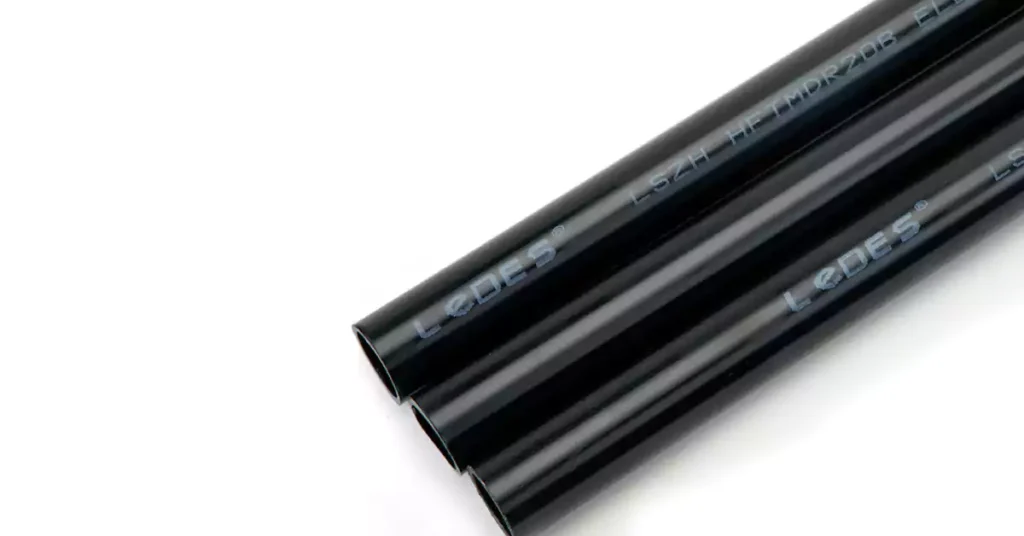
Both LSZH and PVC conduits must comply with specific marking requirements as defined by their respective standards. Markings ensure that the conduits are properly identified for compliance, installation suitability, and traceability. These markings generally include standard references, manufacturer information, size, type, and application-specific ratings.
Follow are some common marking requirements for them:
The phrase “rigid PVC conduit”
Schedule rating: Schedule 40 or 80
The complied standard
The trade size of the conduit product
The name or trademark of the manufacturer
The date or other dating period of manufacture
For Schedule 40 and 80 rigid PVC conduit that intended to used with 90 Degrees Celsius wires, should include “maximum 90°C wire” or “max 90°C”.
The phrase “LSZH or LSOH conduit”
The complied standard
حجم القناة
The name or trademark of the manufacturer
Mechanical strength, such as “MD or HD”
Flammability rating: UL94 V-0 or 5VA
نطاق درجة حرارة
The date of manufacture
Choosing the right conduit for an electrical system is crucial for safety, compliance, and long-term performance. LSZH (Low Smoke Zero Halogen) conduit is specifically designed for fire-sensitive environments where toxic smoke and halogen emissions could endanger lives and damage critical infrastructure.
LSZH conduit is the preferred choice in areas where fire safety, low toxicity, and minimal smoke production are essential. These environments include:
- Rail & Metro Systems – Underground train tunnels, subway stations, and elevated railways require LSZH conduit to comply with NFPA 130 and international transit safety standards. Ledes LSZH conduit was successfully deployed in the Melbourne Metro Tunnel Project, where strict fire and smoke regulations were enforced to protect passengers and infrastructure.
- Airports & Aviation Facilities – Enclosed airport terminals, control towers, and baggage handling areas need LSZH conduit to minimize smoke and toxic gas exposure in the event of a fire.
- Underground Tunnels & Enclosed Spaces – Locations with limited ventilation, such as utility tunnels and mines, benefit from LSZH conduit since it reduces smoke density and allows for better evacuation visibility.
- Hospitals & Healthcare Facilities – In medical environments, toxic halogen gas from burning PVC conduit could pose serious health risks to patients and sensitive medical equipment. LSZH conduit ensures a safer alternative that meets strict fire and safety codes.
- مراكز البيانات والبنية التحتية لتكنولوجيا المعلومات – With the increasing reliance on cloud computing and critical digital infrastructure, data centers require fire-safe and non-corrosive conduit solutions. LSZH conduit prevents damage to expensive servers and network systems by reducing acidic gas emissions that could corrode electronic components.
- Electric Vehicle Charging Stations & Renewable Energy Projects – The growth of EV infrastructure and renewable energy demands safe, fire-resistant conduit systems. LSZH conduit is an excellent choice for EV charging hubs, solar farms, and wind power stations, where electrical safety and long-term reliability are key considerations.
Regulatory compliance plays a critical role in determining whether LSZH conduit is necessary. Many national and international standards specify LSZH conduit for fire-sensitive applications:
- NFPA 130 (Rail Transit Fire Safety Standard) – Requires the use of LSZH materials in enclosed railway systems.
- IEC 61386 (Conduit System Standards) – Defines LSZH performance requirements, including smoke density, halogen content, and fire resistance.
- EN 50267 (Toxicity & Corrosiveness Testing) – Ensures LSZH conduit meets low-emission and non-corrosive standards.
- UL 94 V-0 / 5VA (Flammability Rating) – Confirms superior fire resistance of LSZH conduit compared to traditional PVC.
In high-risk environments, the choice between LSZH and PVC conduit is clear: LSZH conduit provides superior fire safety, lower toxicity, and better protection for both people and equipment.
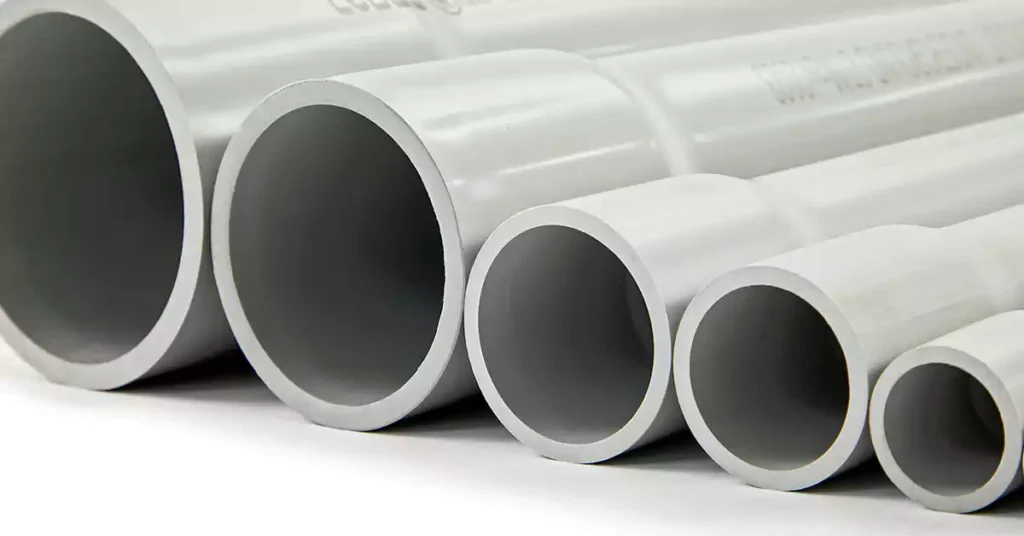
While LSZH conduit is ideal for high-risk environments, PVC conduit remains the most commonly used option for general electrical installations due to its affordability, versatility, and ease of installation. PVC conduit is the best choice when fire safety requirements are less stringent, and cost efficiency is a priority.
PVC conduit is widely used in standard industrial, commercial, and residential electrical systems where fire safety, toxicity, and smoke production are not primary concerns. These include:
Commercial & Residential Electrical Wiring – PVC conduit is commonly used for home wiring, office buildings, and retail spaces, providing an economical and easy-to-install solution. It is particularly effective in drywall installations, concrete embedding, and above-ground conduit runs.
Industrial Facilities & Warehouses – In manufacturing plants, warehouses, and large-scale storage units, PVC conduit is an excellent choice for general electrical protection in areas that do not require halogen-free materials.
Outdoor & Utility Installations – PVC conduit is suitable for outdoor electrical runs, solar installations, and telecommunications infrastructure, thanks to its UV-resistant and corrosion-resistant properties. However, in extreme high-heat environments, alternative materials like HDPE or LSZH may be preferred.
Underground & Direct Burial Applications – Rigid PVC conduit, including DB2, EB1, and Schedule 40/80, is a popular option for direct burial installations in commercial, residential, and industrial projects. It offers excellent resistance to moisture, soil chemicals, and mechanical damage when installed with proper fittings.
PVC conduit is significantly more cost-effective than LSZH conduit, making it the preferred choice for projects that prioritize affordability over fire performance.
Lower Material & Installation Costs – Compared to LSZH conduit, PVC conduit is cheaper per unit and does not require specialized fittings or installation techniques.
التوفر – PVC conduit is widely available, making it a practical choice for large-scale projects that require fast procurement.
However, in environments where fire safety, toxicity, and smoke production are critical concerns, LSZH conduit is the better option despite the higher cost.
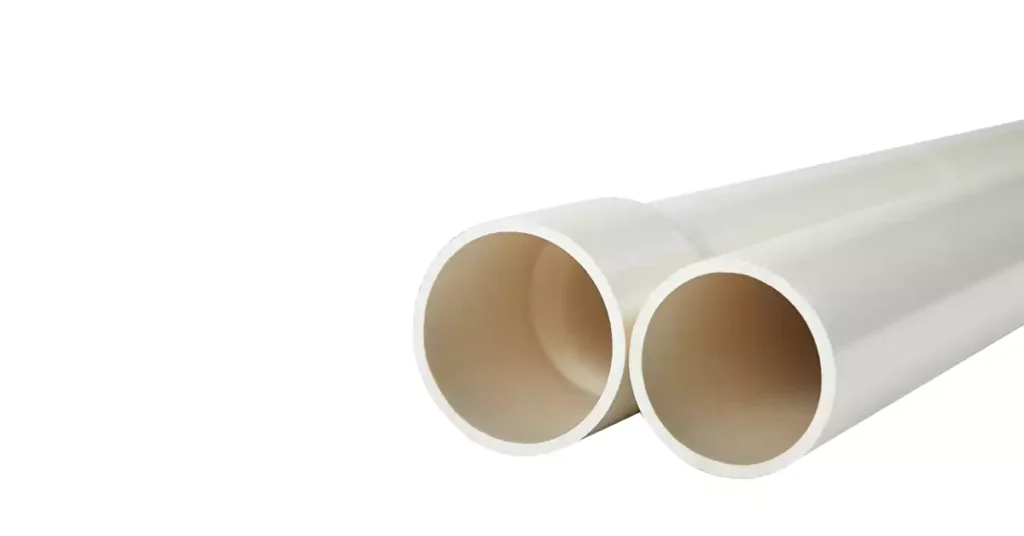
Selecting the appropriate conduit depends on several factors, including budget, safety requirements, installation environment, and regulatory compliance. Each project has unique demands, and understanding these considerations will help in making an informed choice between LSZH and PVC conduit.
Key Factors to Consider:
If the project is in a high-risk environment where fire safety is a priority (e.g., tunnels, railways, data centers, or hospitals), LSZH conduit is the better choice due to its low smoke and halogen-free properties. PVC conduit may be sufficient for general applications where fire risk is minimal.
LSZH conduits generally cost more than PVC due to their specialized materials and fire-resistant properties. For cost-sensitive projects that do not require high fire safety compliance, PVC is often preferred.
LSZH is the more environmentally friendly option, as it does not release toxic halogens or corrosive gases during combustion. If sustainability and reduced emissions are priorities, LSZH is the better choice. However, PVC offers better recyclability in controlled conditions.
Outdoor installations exposed to direct sunlight and varying temperatures require UV-resistant conduit. In enclosed spaces with limited ventilation, LSZH is recommended to reduce toxic emissions in case of a fire.
For areas facing high stresses and forces, Schedule 80 PVC conduit may be more suitable. Heavy duty LSZH conduit, while offering high mechanical strength as well, but not as good as Schedule 80 under normal installation temperatures.
Ensure the conduit meets local codes and standards (e.g., UL, CSA, AS/NZS) based on regional and industry-specific requirements. Certain industries, such as transportation systems and hospitals, may mandate LSZH use.
By carefully assessing these factors, project planners and engineers can make the best decision on whether LSZH or PVC conduit is the most suitable option for their specific application.
Choosing between LSZH conduit and PVC conduit ultimately comes down to understanding the specific needs of your project.
Throughout this article, we explored their key differences — from toxicity and fire safety, durability and lifespan, installation and maintenance considerations, to their environmental impact and compliance with various codes and standards.
In short:
- قنوات LSZH excel in environments where fire safety, low toxic emissions, and strict regulatory compliance are top priorities — such as subways, tunnels, hospitals, airports, and data centers.
- PVC conduits, on the other hand, are a great solution for standard industrial, commercial, and residential applications, offering cost-effective and easy-to-install options where fire risk is lower.
Final Recommendation:
Always align your conduit choice with your project’s safety requirements, environmental goals, budget constraints, and regulatory needs. Selecting the right type will not only ensure long-term performance but also significantly improve overall project safety.
Need help choosing the right conduit?
Feel free to contact us to request product catalogs, technical support, and competitive quotations.
We are happy to assist you with selecting the most suitable solutions for your specific project needs!
الأسئلة الشائعة
ما الفرق بين أنابيب LSZH وأنابيب PVC؟
To have a more clear understanding of the differences between LSZH and PVC conduit, here is the comparison table for reference:
LSZH Vs PVC Conduit Table
ميزة | قناة LSZH | قناة بي في سي |
Smoke and Toxicity | Releases low smoke and non-halogenated gases during fire, safer for evacuation and rescue. | Can release toxic and corrosive gases (like hydrogen chloride) during combustion. |
Ideal Applications | Used in high-safety environments like airports, tunnels, hospitals, data centers, and railways. | Suitable for general industrial, commercial, and residential projects. |
Environmental Impact | Halogen-free, helps reduce environmental pollution. | Contains chlorine; incineration can produce dioxins. |
متانة | Strong impact resistance, compression strength, and wide temperature tolerance. | Excellent mechanical performance; needs UV protection and thermal expansion considerations outdoors. |
يكلف | Generally higher cost due to material and performance advantages. | More affordable, ideal for cost-sensitive projects without strict fire safety needs. |
Standards Compliance | Meet strict standards of smoke, fire and other performance requirements, such as IEC 61386, IEC 60752, ASTM E662, UL 94, UL1685, NFPA 130 etc. | Certified under standards like UL651, CSA C22.2 No.211.2, IEC 61386, AS/NZS 2053 and other standards that required by local codes. |
هل يمكن استخدام أنابيب LSZH وأنابيب PVC معًا؟
Technically, yes — but it depends on the project requirements and safety standards.
- Fire Safety and Compliance:
In critical environments (like tunnels, airports, hospitals), mixing LSZH and PVC is usually not recommended. Many fire safety codes require the entire system — including conduits, fittings, and cables — to meet low-smoke, halogen-free standards. Using PVC alongside LSZH could compromise the overall fire performance and regulatory compliance. - Standard Industrial or Commercial Projects:
In less critical projects (like general commercial buildings or factories), using LSZH and PVC together is possible if the system does not have strict halogen-free requirements. For example, you might use LSZH conduit in sensitive areas (e.g., server rooms) and PVC elsewhere to save costs.
- Practical Considerations:
Connection compatibility: LSZH and PVC conduits typically use different formulations, but dimensions can be similar, especially when following standards like UL or CSA. Standard PVC fittings might physically fit LSZH conduits and vice versa, but check material compatibility if high mechanical strength or long-term sealing is important.
System Integrity: Mixing different material properties (thermal expansion, chemical resistance) could cause issues over time, especially in outdoor or extreme environments.
خاتمة
If your project prioritizes fire safety, toxicity control, or must follow strict codes (e.g., NFPA 130 for transit tunnels), don’t mix LSZH with PVC — stick with full LSZH systems.
If your project has no halogen-free requirements and budget optimization is important, mixing may be acceptable — but it should be clearly documented and approved by the engineering team
هل مادة LSZH أفضل دائماً من مادة PVC؟
Not always — it really depends on the project’s needs. Here’s a simple breakdown:
- Depends on the Application: LSZH conduit excels in environments where fire safety and low toxicity are critical, such as tunnels, hospitals, airports, and data centers. However, in open areas or projects without strict fire safety demands, PVC conduit is often a more practical and cost-effective choice.
- Fire and Smoke Performance: LSZH conduit produces far less smoke and no halogen gases when exposed to fire, making it safer for people and sensitive equipment during an emergency. PVC, on the other hand, can release dense smoke and corrosive gases when burning.
- Cost Considerations: LSZH conduit is usually more expensive than standard PVC conduit. For projects with tight budgets and less critical fire safety needs, PVC can be the more economical option.
- Durability and Environmental Factors: Both materials are durable, but they have different strengths. For extreme temperatures, LSZH performs better than PVC. LSZH is especially chosen for its low-toxicity fire behavior and weathering performance, while PVC is often choose for installations where face high external forces, especially Schedule 80 rigid PVC conduit.
مراجع:
IEC 61386-1: Conduit systems for cable management – Part 1: General requirements
اختبارات الاحتراق (الحريق) للبلاستيك وفقًا لمعايير مختبرات UL
UL 1685 – اختبار انبعاث الدخان للكابلات والأنابيب
معيار IEEE لاختبار انتشار اللهب في الأسلاك والكابلات
NFPA 130: معيار لأنظمة النقل ذات المسار الثابت وأنظمة السكك الحديدية للركاب